

The Prisoners
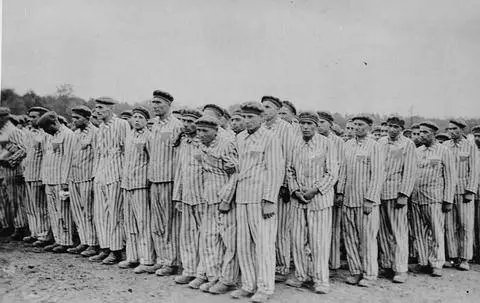
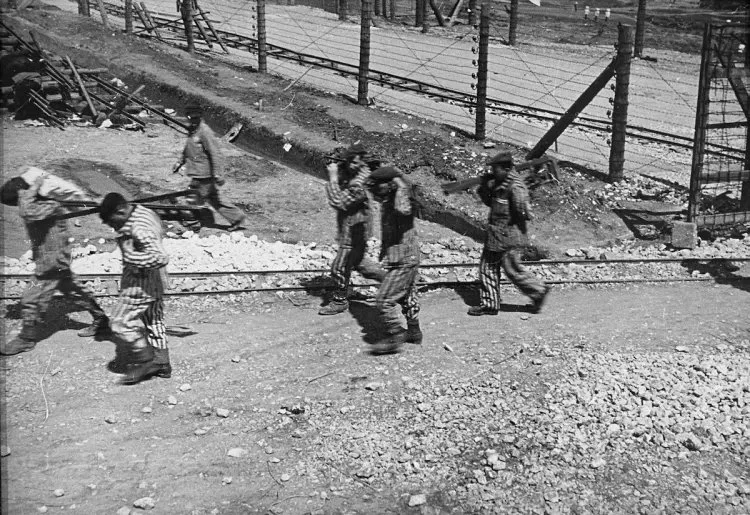
Mittelbau-Dora was a Nazi concentration camp located near Nordhausen in Thuringia, Germany. In the early morning hours of 28 August 1943, the SS herded 107 inmates to the gates of the Buchenwald Concentration Camp. They had been selected for the "Transport Süd" (southern transport), which in reality headed north. They were taken by truck to the Kohnstein, a 335 meter-high hill in the Harz foothills near Nordhausen, where they were forced to perform heavy labor, converting an underground fuel depot into a bomb-proof armaments factory.
The arrival of these first 107 inmates marked the establishment of the "Dora Labor Camp". Dora supplied slave labour from many Eastern countries occupied by Germany, for extending the nearby tunnels in the Kohnstein and for manufacturing the V-2 rocket and the V-1 flying bomb. In the following 15 months, it was expanded into the sprawling concentration camp complex Mittelbau, with a total of 60,000 inmates.
On October 3, 1942, the first successful launch of the A-4 rocket, also known as the V-2, took place at Peenemunde, with research, development and testing taking on a fever pitch. Due to war constraints labor was increasingly difficult to come by, with Germany now fully embroiled with its occupation of Western Europe while conducting an aggressive war against the Soviet Union.
By 1942, Minister of Armaments and Munitions Albert Speer convinced Hitler to place the use of slave labor in armaments and material factories under his jurisdiction, due to a number of reasons.
One of these being that the tools and machines needed for labor were not available in the concentration camps themselves, therefore the “workers” needed to be moved to camps built in concert with factories.
In late 1942 a “non-SS contingent” of several thousand Polish and Soviet laborers arrived in Peenemunde to build electrical power stations, missile production facilities, and the liquid-oxygen plant.
From Von Braun, the V-2, and Slave Labor
by By Darren Court, Museum Director/Curator, White Sands Missile Range Museum
Resources
-
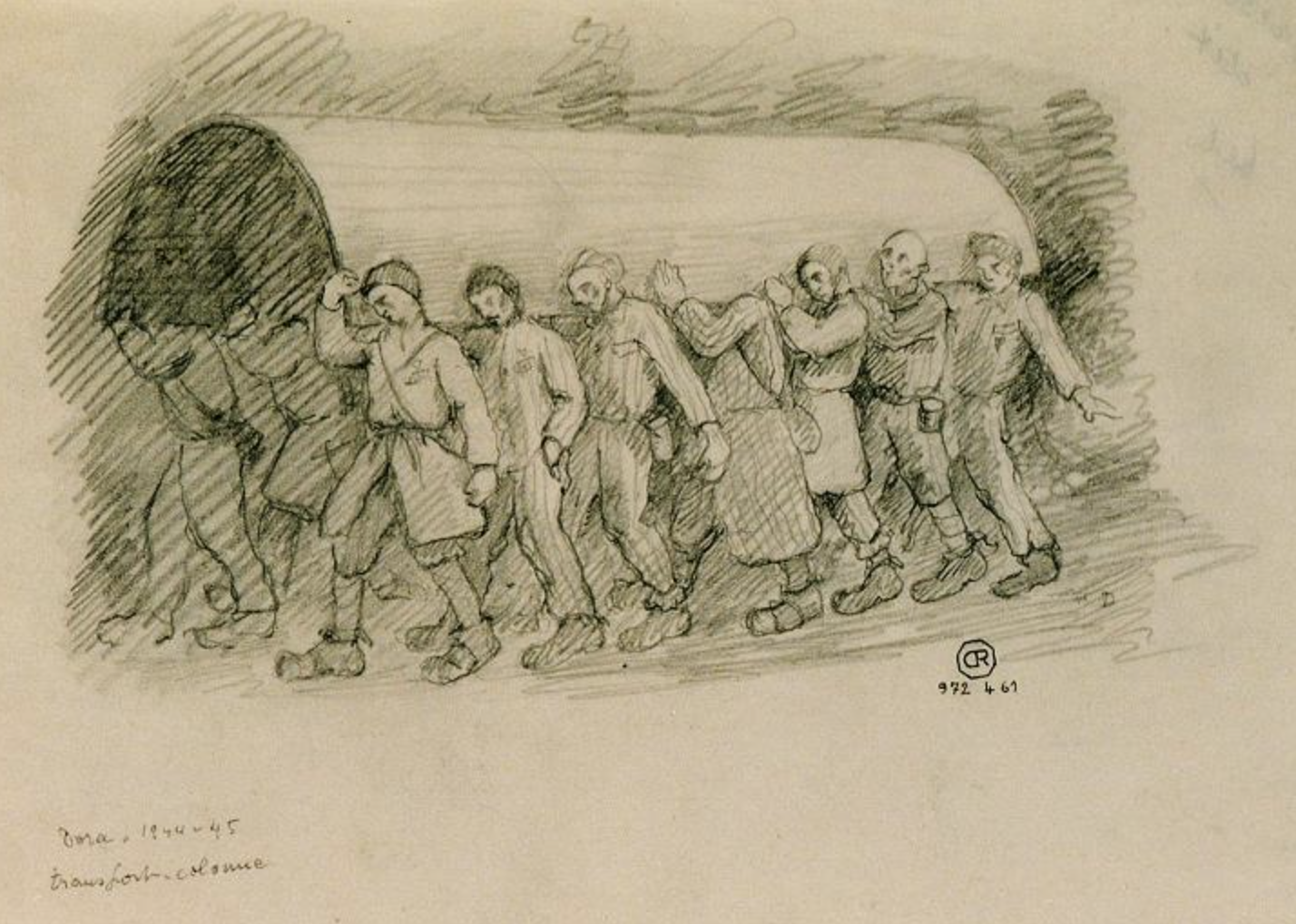
Dora and the V-2: Slave labor in the space age
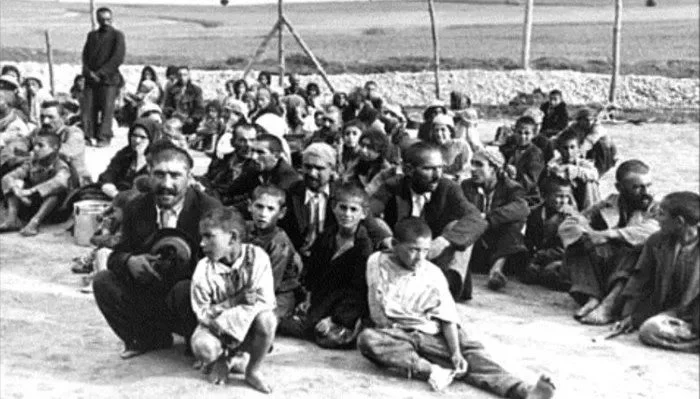
The system of slave labor for V–2 missiles—which first began at the Peenemünde facility in the spring of 1943—expanded dramatically in August 1943 when the production site moved underground at the Kohnstein mountain near Nordhausen. This system reflected the Nazi government’s extensive exploitation of forced labor in its armaments and other industries. By 1944, the Nazis used 7.5 million forced laborers, both Jews and non–Jews, among these over 60,000 at Dora. Dora laborers included political prisoners such as members of the French resistance, Soviet and other eastern POWs, prisoners classified as “asocial,” and some Hungarian Jews who arrived in summer 1944.
-
The Women of Penig
The Max Gehrt Works in Penig had already been requesting concentration camp inmate labourers for some time. On 10 January, the SS responded by sending a transport of 700 female forced labourers from Ravensbrück to the new Buchenwald subcamp in the small Saxon town.
The women were Hungarian Jews. They had been driven to the German-Hungarian border by force, many of them on foot. From there they were taken in cattle cars to Ravensbrück, where they arrived in early December 1944. They were exhausted and sick. Many were suffering from frostbite. For the managers of the Gehrt Works, however, they were still healthy enough for further exploitation.
-
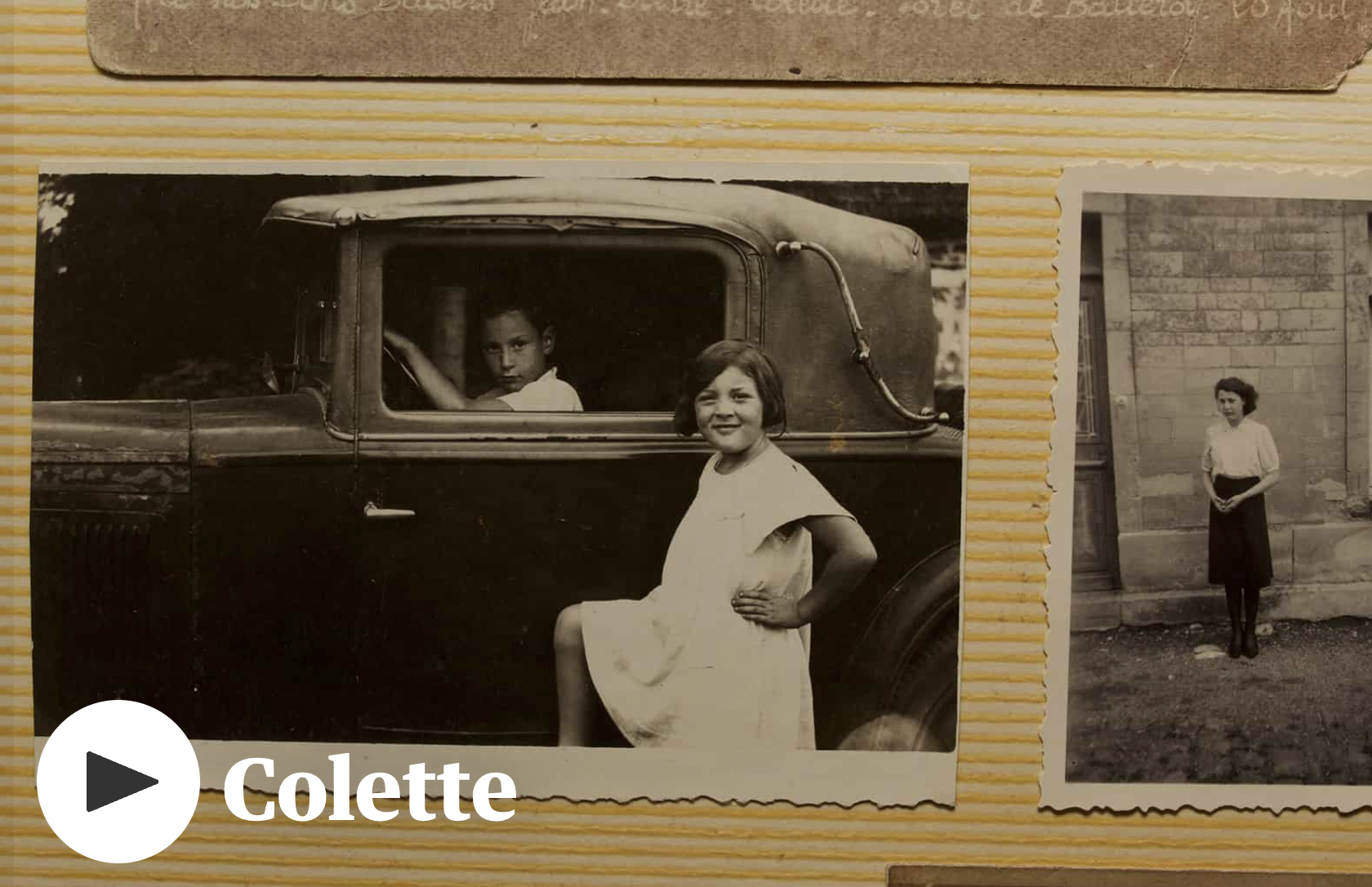
Colette documentary
2021 Oscar winner for short form documentary (25 min)
90-year-old Colette Marin-Catherine confronts her past by visiting the German concentration camp Mittelbau-Dora where her brother was killed. As a young girl, she fought Hitler's Nazis as a member of the French Resistance. For 74 years, she has refused to step foot in Germany, but that changes when a young history student named Lucie enters her life. Prepared to re-open old wounds and revisit the terrors of that time, Marin-Catherine offers important lessons for us all.