
The Places
The Operation Paperclip scientists first came together under Wernher Von Braun at Peenemünde, known as the birthplace of rocketry. After it was bombed, they had to move V-2 production elsewhere, and needed labor. Dora became the place for this production. At the end of the war, when the scientists surrendered to the U.S., they were then brought to Fort Bliss (AZ) and ultimately to Huntsville, Alabama.
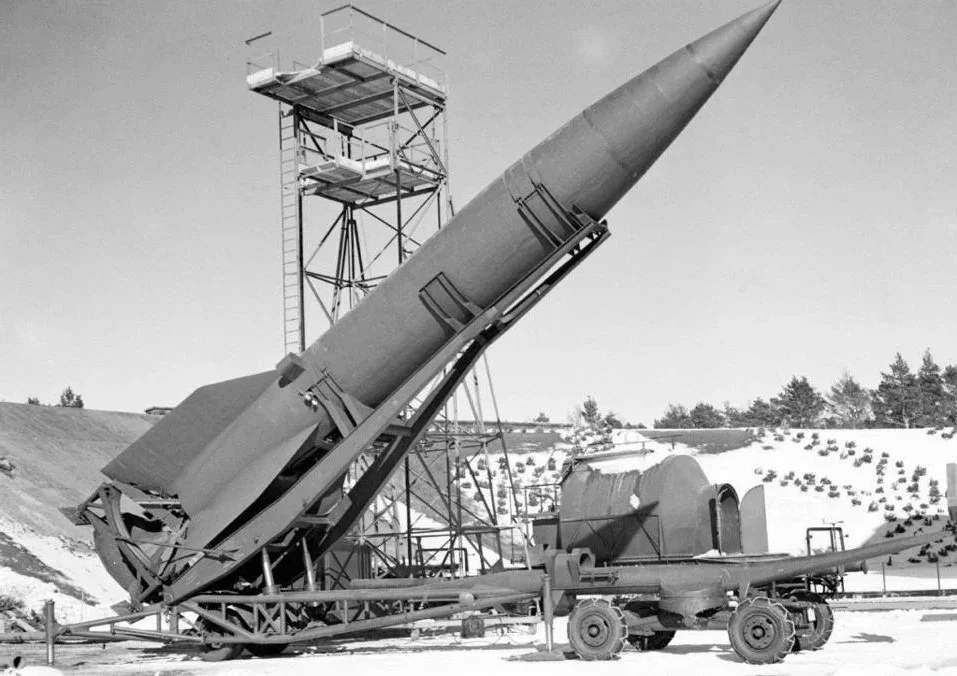
Peenemünde
From 1936 to 1945, the research stations in Peenemünde formed the largest armaments centre in Europe, most famously building the world’s first cruise missiles and the first ever functioning large-scale rockets - both designed as weapons of terror against the civil population and made mostly by forced labourers - and becoming viewed as the birthplace of rocketry. The land was discovered by Wernher von Braun himself, and was family property.
-
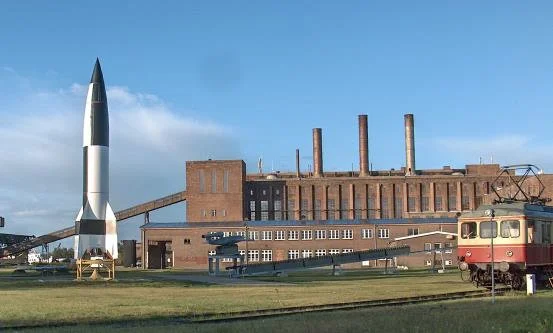
The Peenemünde Historical Technical Museum
From 1936 to 1945, the research stations in Peenemünde formed the largest armaments centre in Europe. Over an area of 25km², up to 12,000 people worked simultaneously on guided weapons, most famously the world’s first cruise missiles and the first ever functioning large-scale rockets. Both were designed as a weapon of terror against the civil population, made mostly by forced labourers and from 1944 they began to be used in the Second World War as “Vergeltungswaffen” (V-weapons).
-
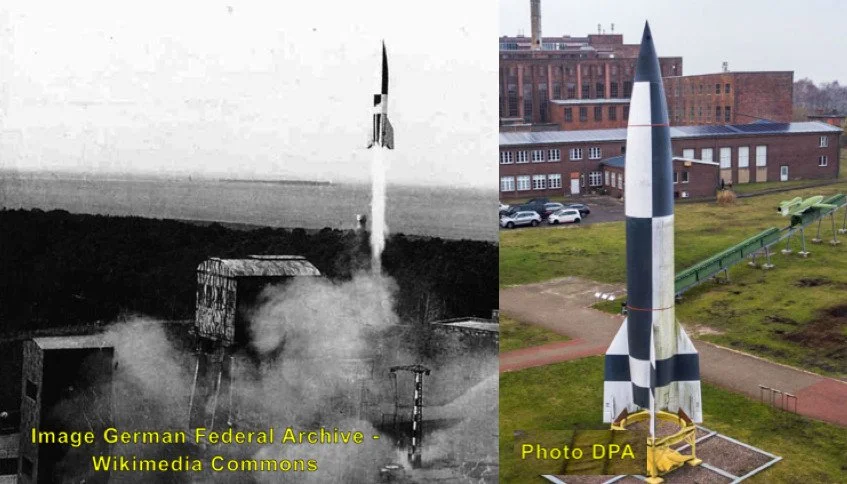
Peenemünde 75. Then and Now.
2017 commemorated the 75th anniversary of the first successful launch into space on October 3rd, 1942 in Peenemünde, Germany. A small group of Wernher von Braun team enthusiasts traveled to Peenemünde.
There have been other returns to Peenemünde in 1991 and in 2010.
-
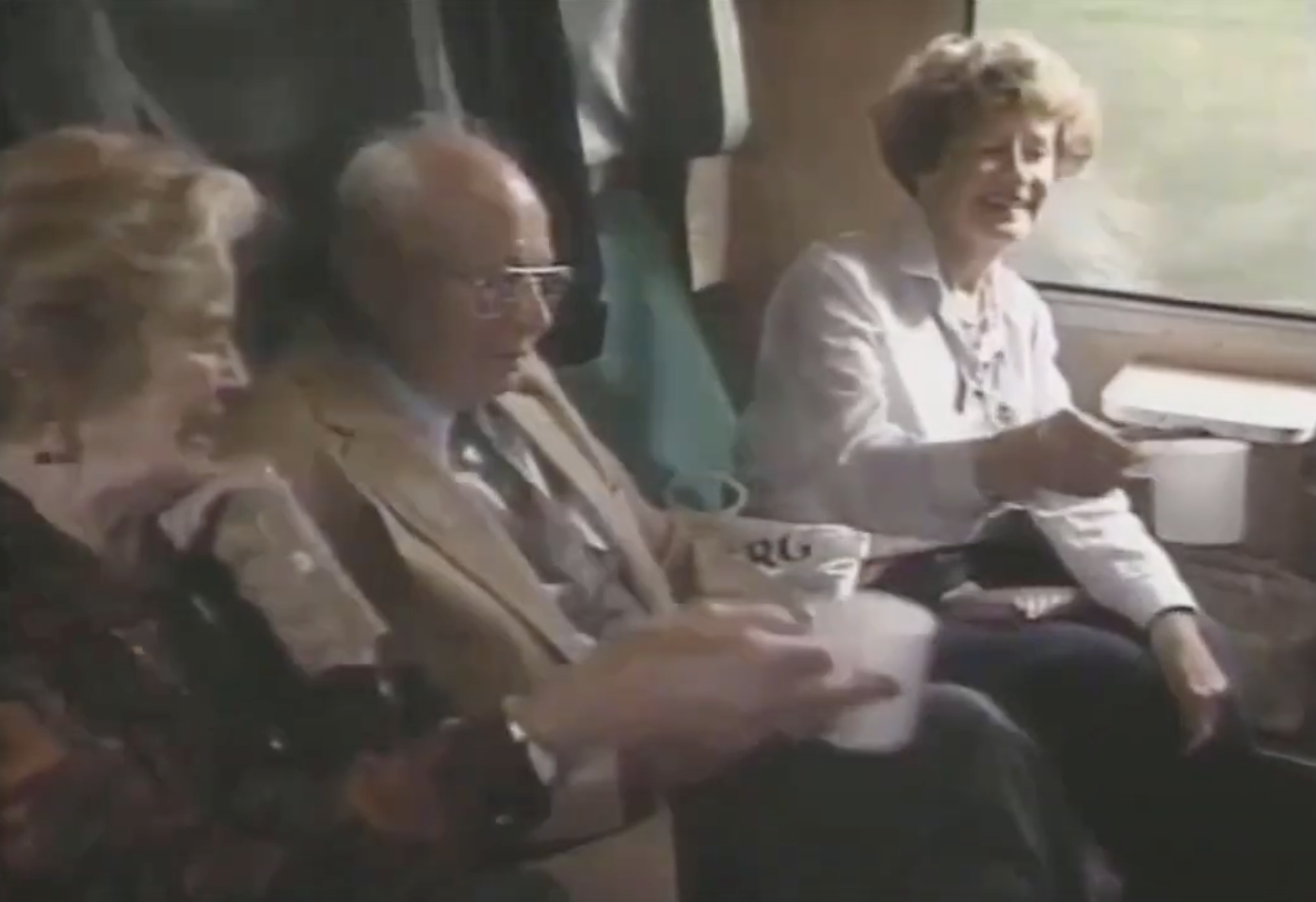
Return to Peenemunde Germany - September 1991
This video documentary was created in September 1991 to record the first return visit to Peenemünde, Germany, since the end of the World War II in 1945 by several surviving Wernher von Braun rocket team members and their families. Such a visit had only become possible after the fall of the Berlin Wall in 1989 since Peenemünde had been part of the Russian occupied zone in what became known as East Germany.
-
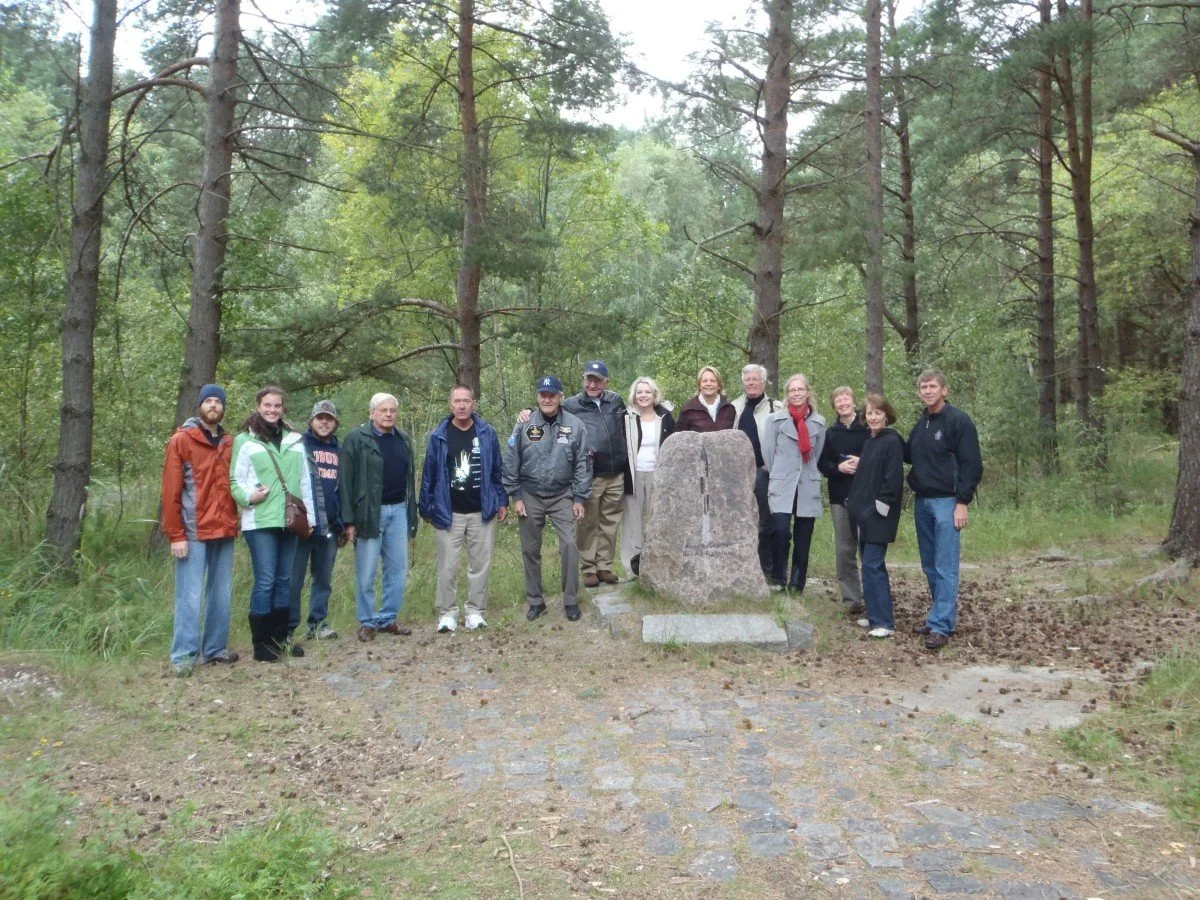
German Rocket Site Unearths Memories
In the lush, green forest of eastern Germany on the Baltic Sea, Heidi Weber Collier discovered a little of her family's past.
Walking through woods that have grown up during the past 65 years, Collier was among 30 Americans whose interest in the area heralds back to the days of Dr. Wernher von Braun's first attempts to put a rocket in space. Collier's father - German engineer Fritz Weber - was among the more than 2,000 scientists who worked on rockets that were first destined for space but eventually used by the Germans to attack Europe.
Collier's family past includes Peenemunde and the V-2 rocket, remnants of Hitler's Germany and World War II.
But her family past also includes the Explorer I rocket, NASA's Marshall Space Flight Center, the Saturn V rocket and the first man on the moon.
-
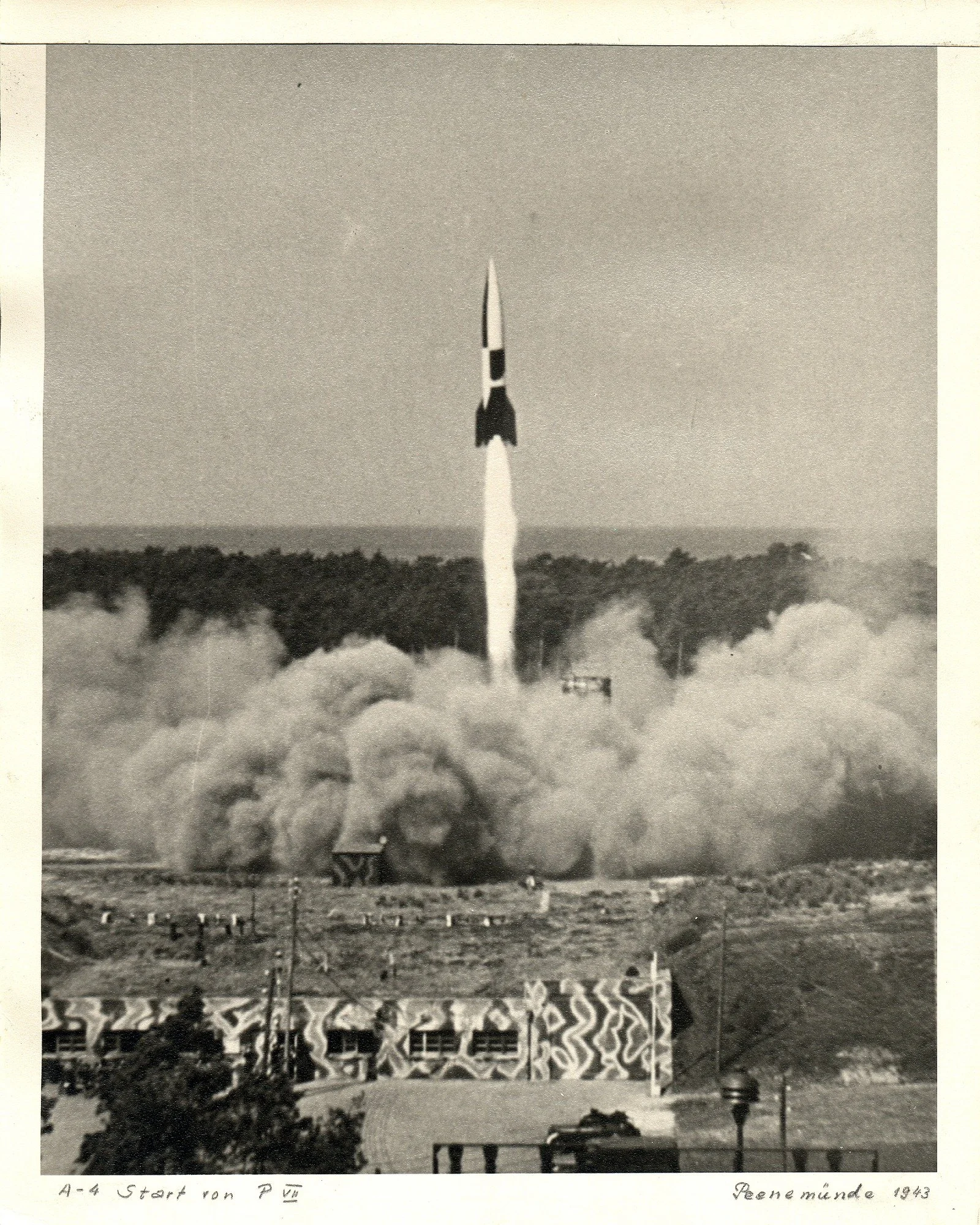
National Air and Space Museum Archives Peenemünde Interviews Project
This collection consists of the oral history recordings and transcripts for the Peenemünde Interviews Project, which examined the development of the German Peenemünde complex from the early 1930s through World War II.
The collection consists of 39 hours of interviews with 13 individuals (in both audio cassette and transcript formats).
-
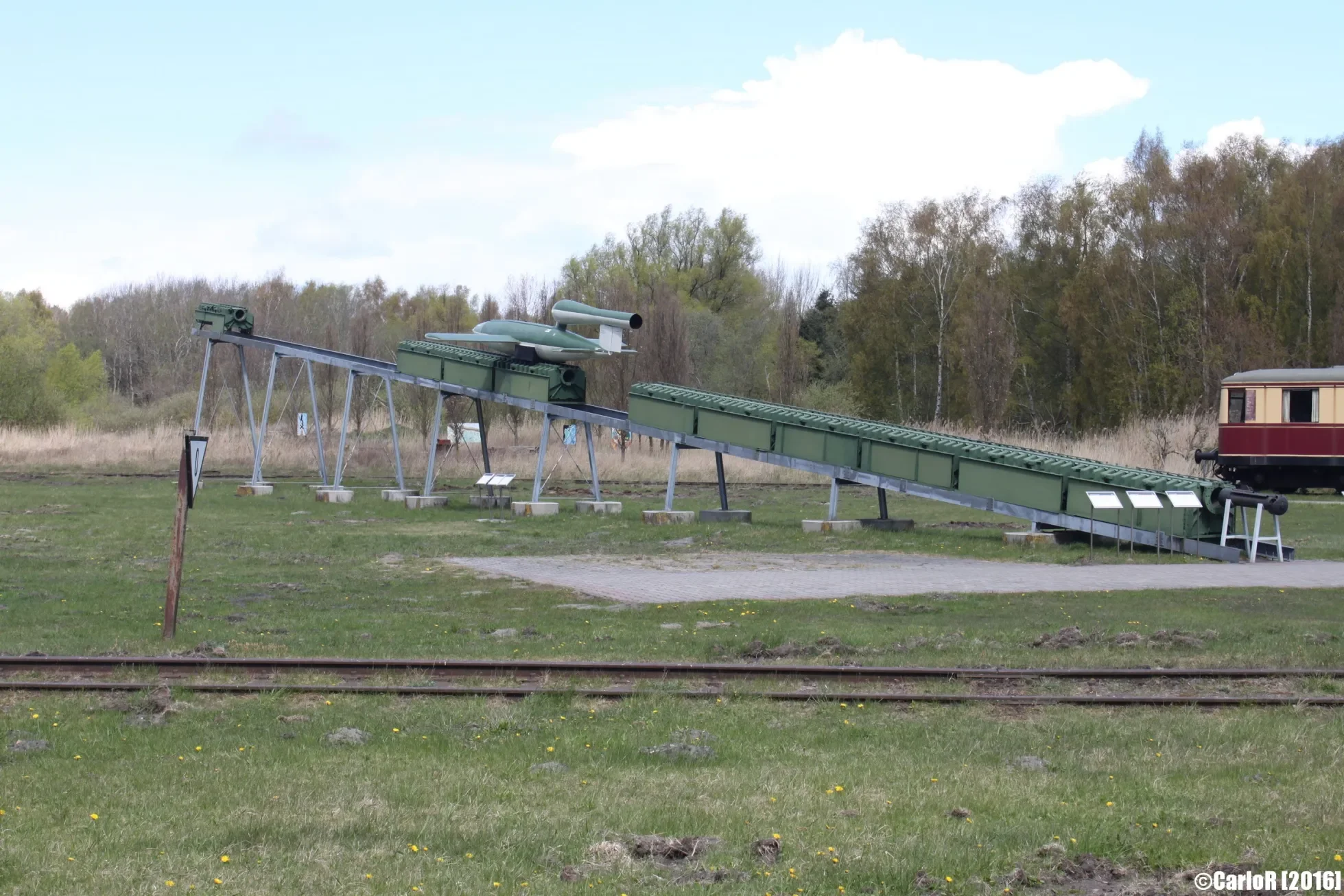
Peenemünde Army Research Facility
Peenemünde is broadly known for having hosted the first ever large-scale research center and test ground for military rockets, missiles, flying bombs and innovative ordnance and weaponry in the world. The small town of Peenemünde is located on the island of Usedom, a nice, almost flat island on the shore of the Baltic sea, on the border between today’s Germany and Poland – ‘Peene’ is a river having its mouth (‘münde’ in German, from which the name of the place) where Usedom island is.
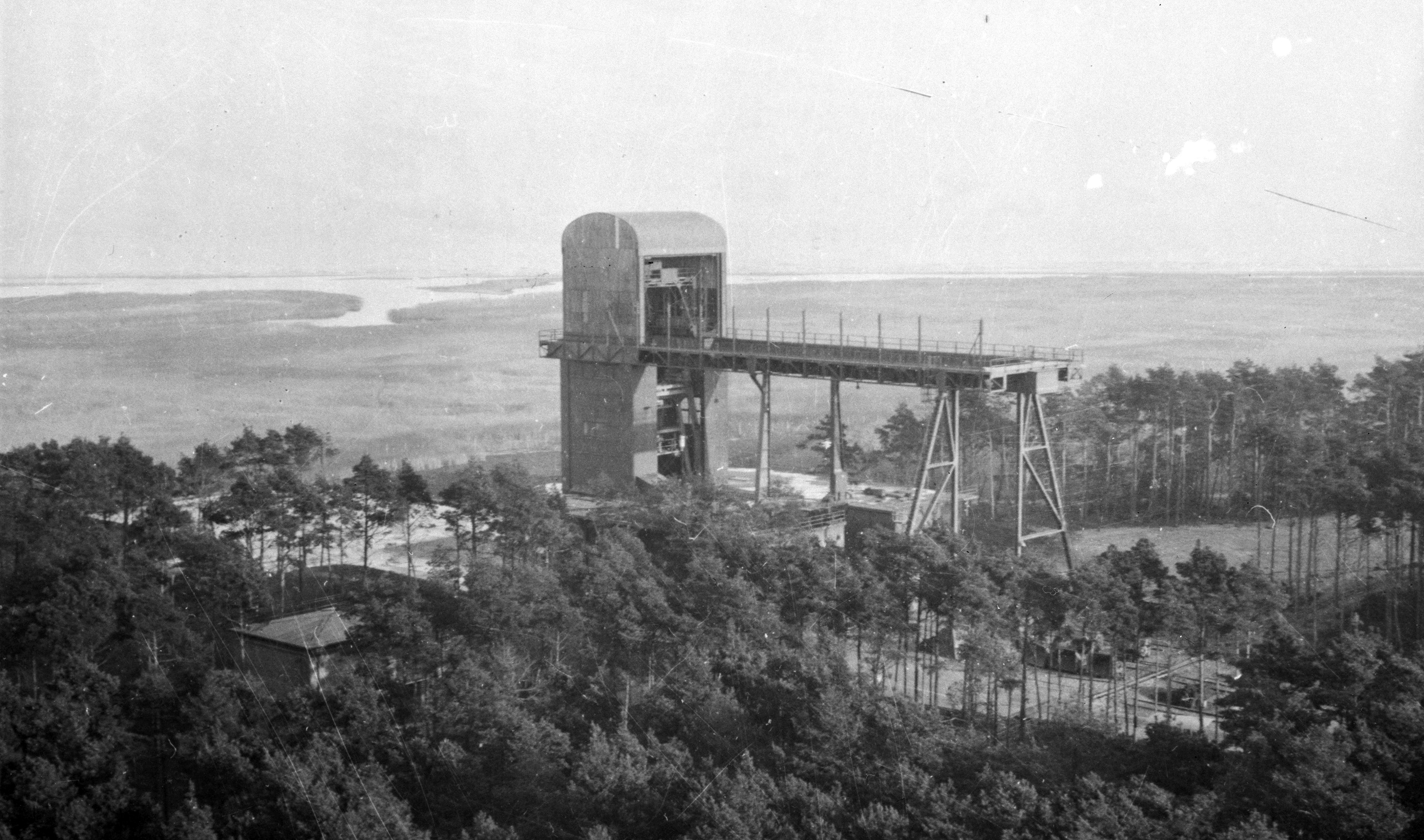
A-4 engine and rocket propulsion test stand, Peenemünde
Peenemünde, @HTMPeenemündeGmbH
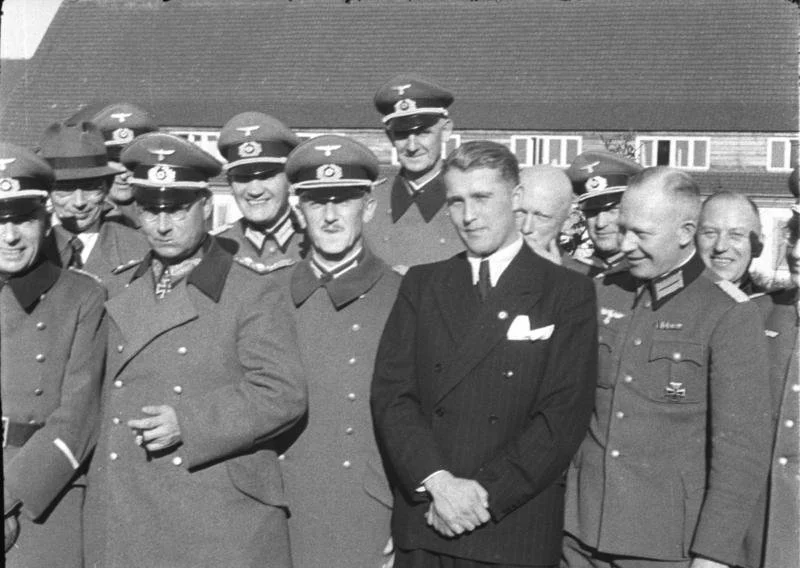
Werner von Braun with Dornberger, Olbricht and Brandt, Peenemünde
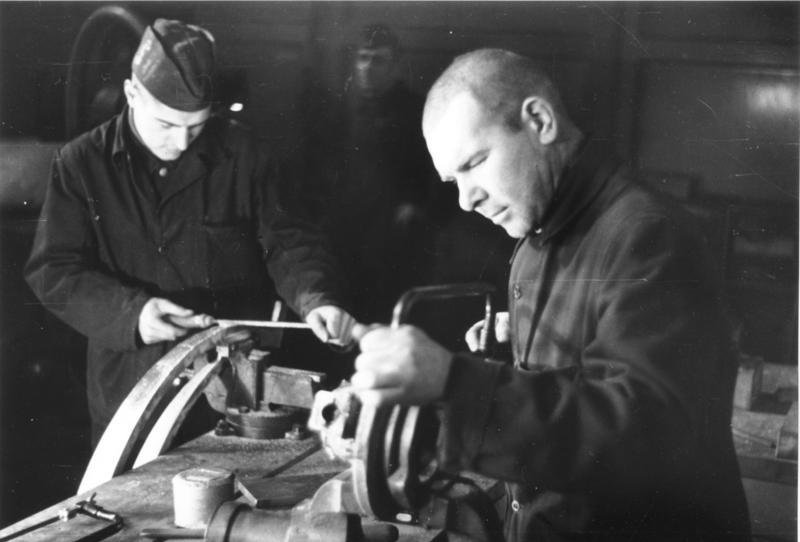
Workers, Peenemünde
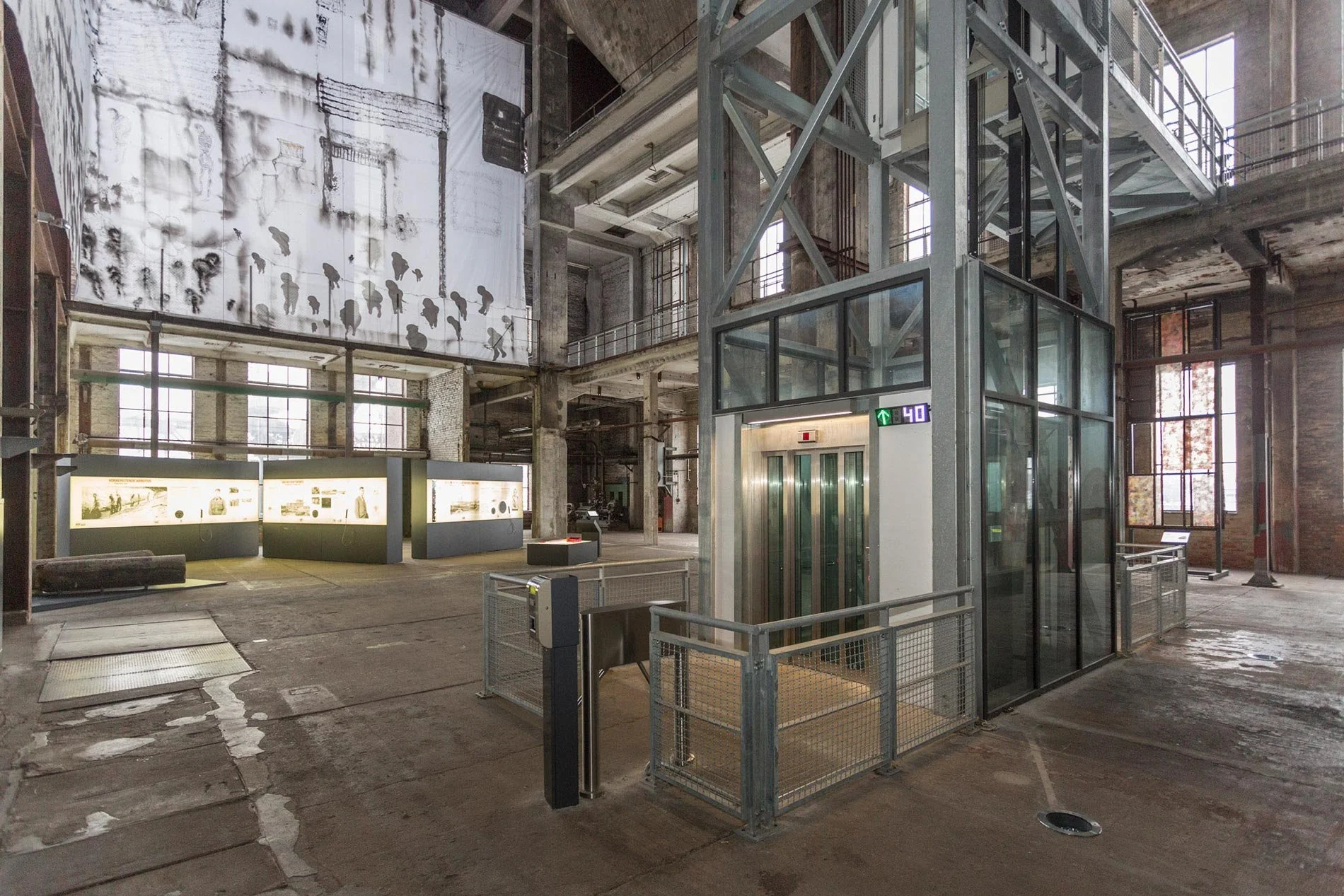
Peenemünde, @HTMPeenemündeGmbH
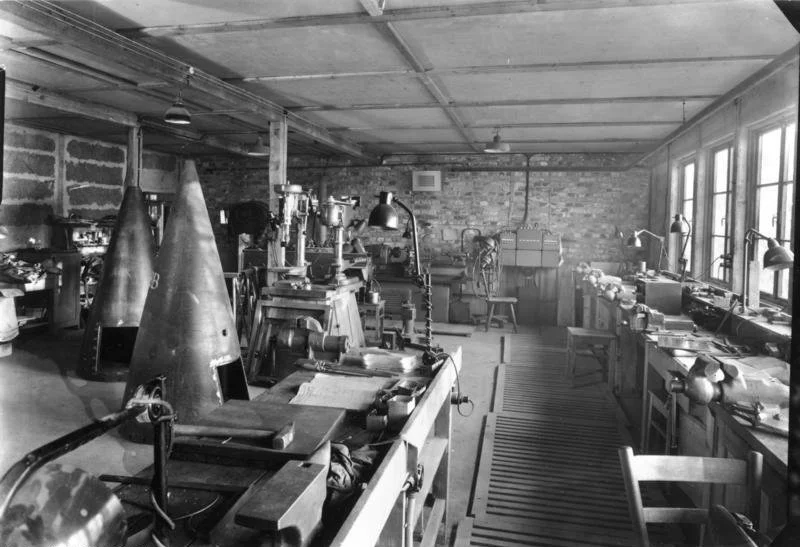
Workstations, Peenemünde
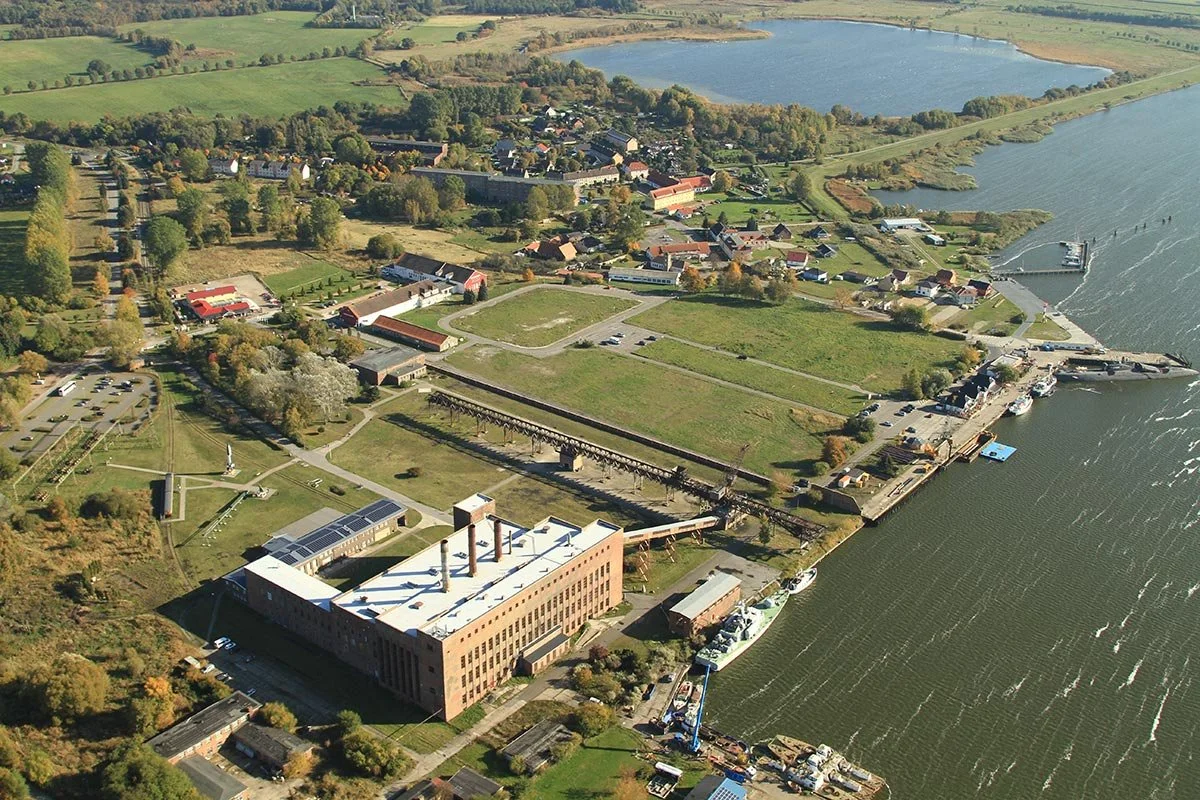
Aerial view, Peenemünde, @HTMPeenemündeGmbH
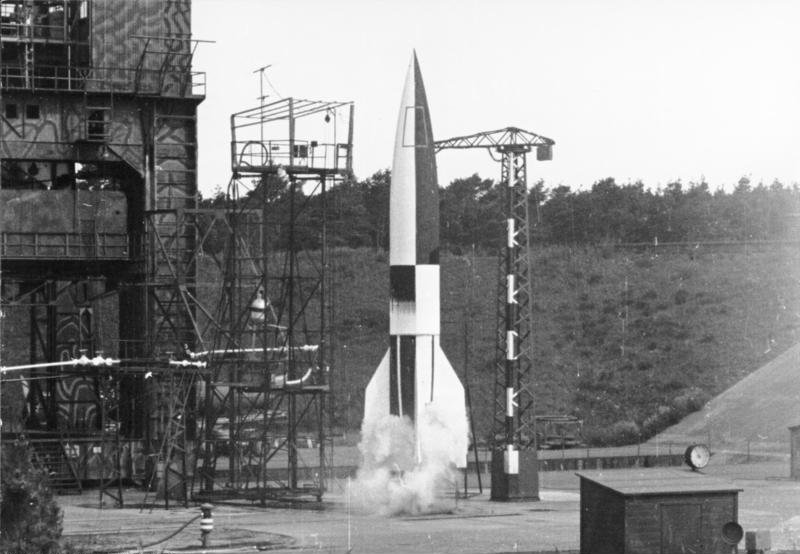
V-2 at startup, Peenemünde
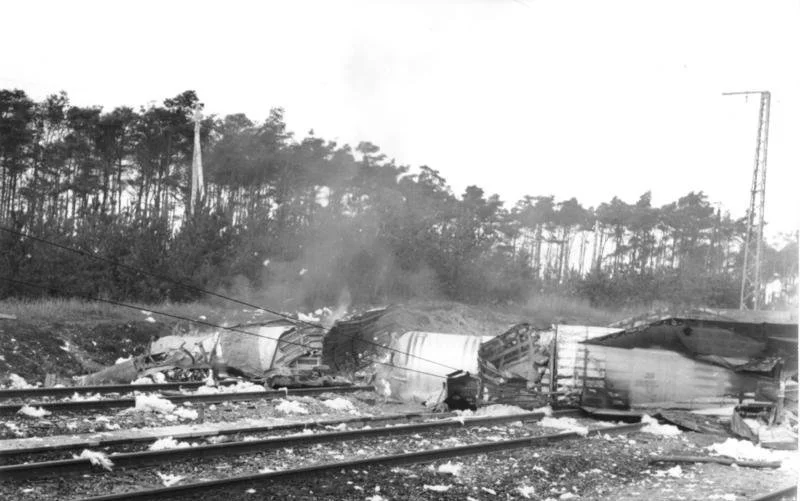
Rocket crash, Peenemünde
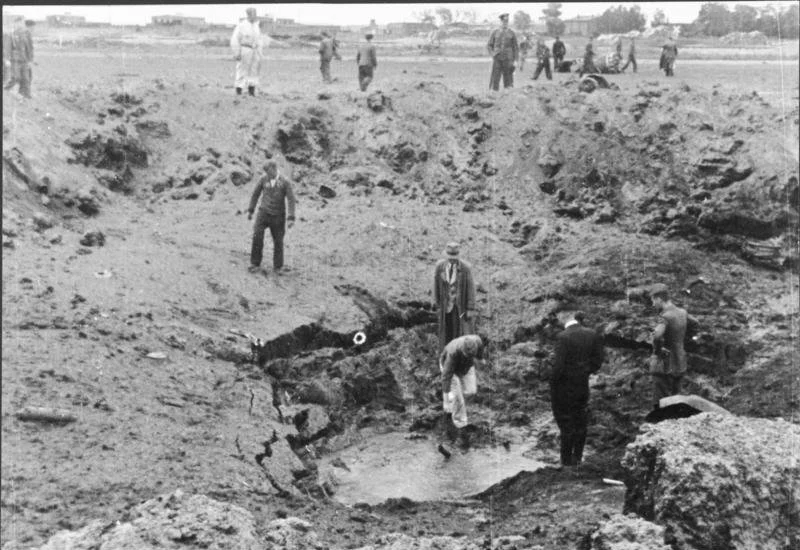
Impact crater, Peenemünde
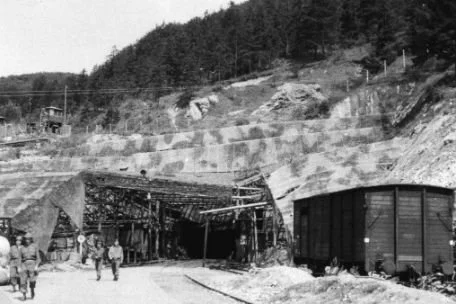
Dora-Mittelbau
The 3rd Armored Division discovered the Dora-Mittelbau concentration camp on April 11, 1945. The camp, located near the town of Nordhausen, was – like Ohrdruf – originally created as a subcamp of Buchenwald in order to produce the V-1 and V-2 rockets. After thousands of prisoners from Buchenwald were sent to the camp in 1944 to work in the subterranean factories, the SS made the camp an independent concentration camp with more than 30 subcamps feeding laborers into it.
From The Allied Race to Victory: The Air, Land, and Sea Campaigns that Ended WWII: Dora-Mittelbau
exhibit from the Pritzker Military Museum & Library
-
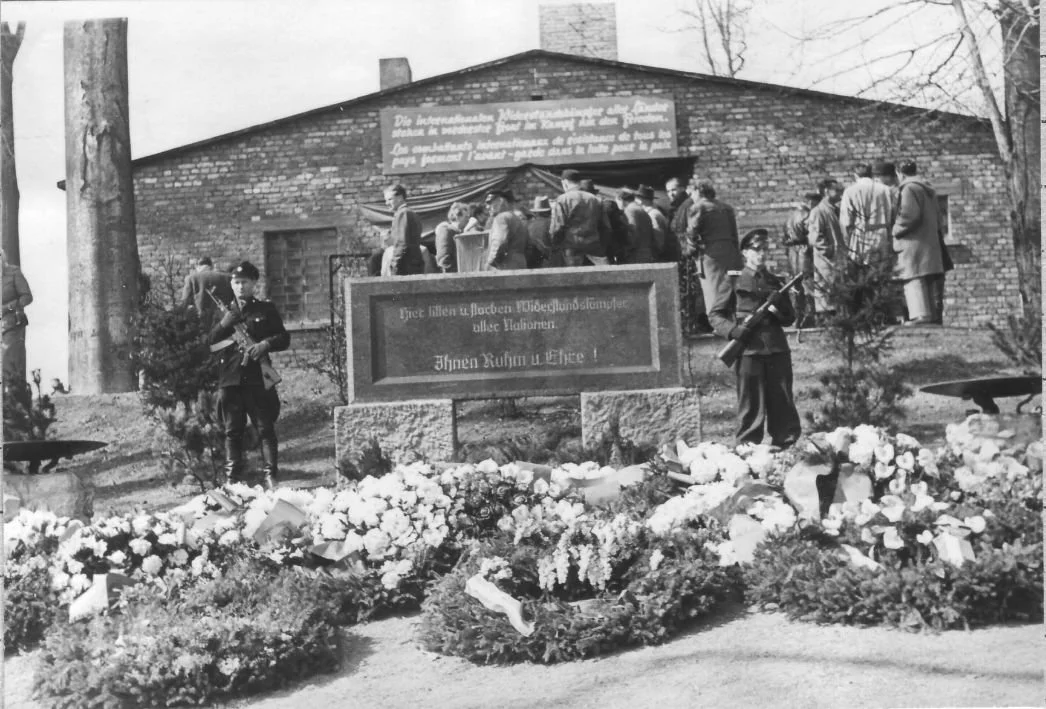
Mittelbau-Dora Memorial
Find out about the history of Mittelbau-Dora Concentration Camp through maps, videos, blog entries or downloadable scholarly articles.
Some only available in German.
Arrest of Werner von Braun and trials
After the war, American, British and – later – Soviet rocket experts secured the construction plans and components of the A4 rocket found in the Mittelwerk. During the same period, Allied investigation committees worked to shed light on the crimes committed in the Mittelbau camps.
-
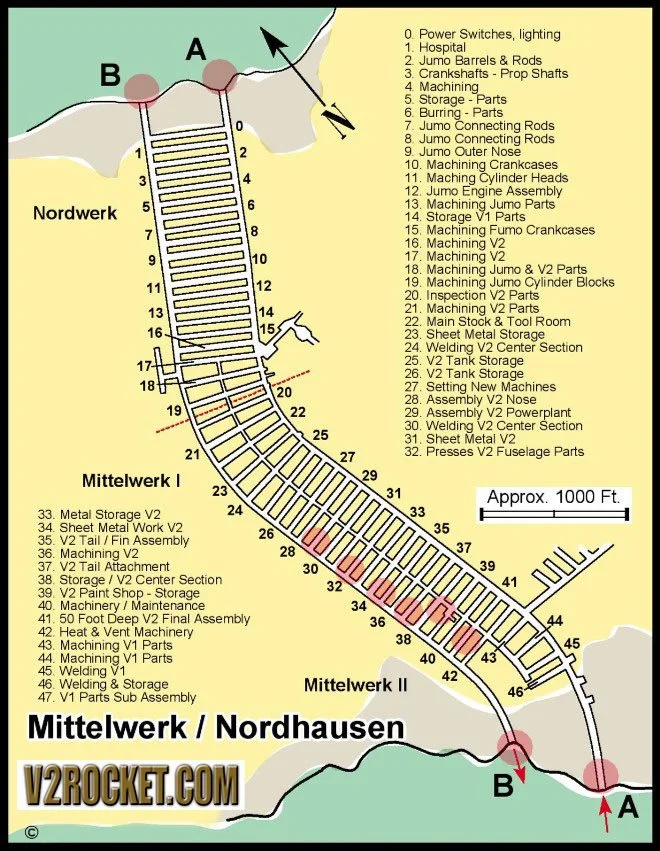
Map
-
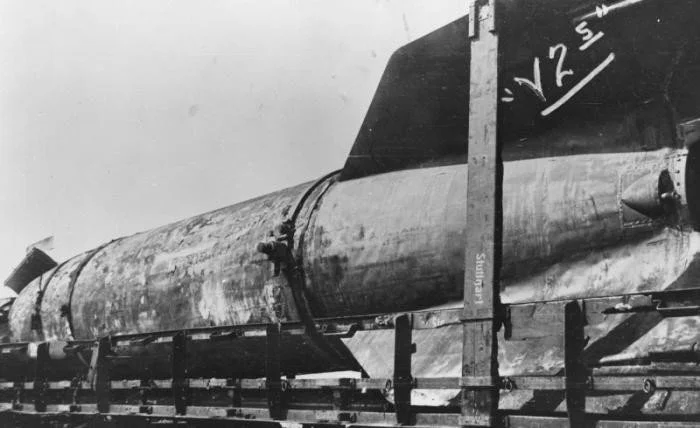
Mittelbau Main Camp: In Depth
Millions of people suffered and died in camps, ghettos, and other sites during the Holocaust. The Nazis and their allies oversaw more than 44,000 camps, ghettos, and other sites of detention, persecution, forced labor, and murder. Among them was the Mittelbau main camp, also known as Dora.
-
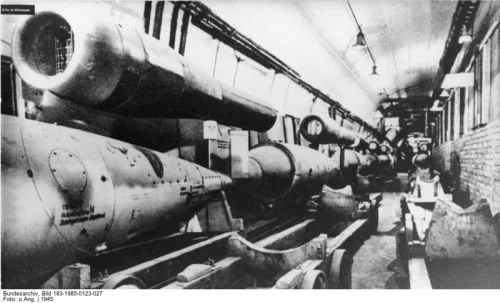
Dora - Nordhausen - V1 production 1945 (Bundesarchiv)
Dora -Mittelbau also known as Dora-Nordhausen was a concentration camp in the Harz Mountains, three miles from Nordhausen, Saxony, in Thuringia, Germany.
The Dora- Nordhausen camp was first mentioned on August 27, 1943, as an external unit of the Buchenwald Concentration Camp. On October 28, 1944, it became an important concentration camp in its own right, with twenty-three branches, most of them in the vicinity, inside a restricted military area. Following Adolf Hitler's August 22, 1943, order for Reichsführer-SS Heinrich Himmler to use concentration camp workers for A-4 production, 107 inmates arrived at Nordhausen from Buchenwald on August 28, 1943, followed by 1,223 on September 2, 1943.
-
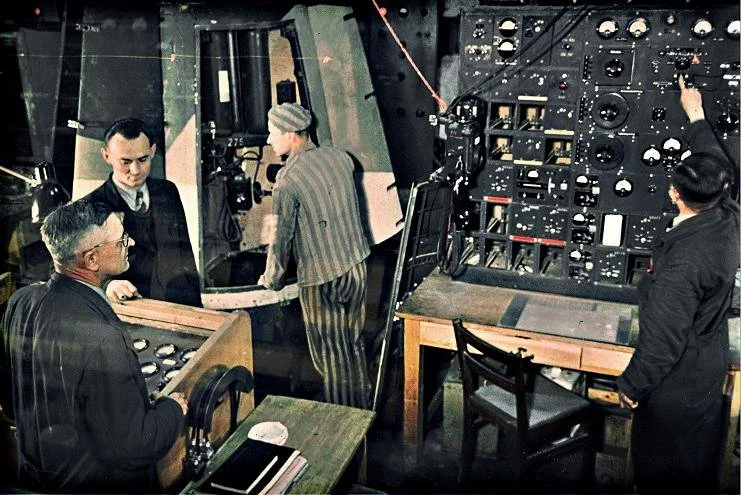
Dora and the V-2: Slave labor in the space age
This website explores the history of forced labor in the construction of the V–2 missiles at the Dora concentration camp and Mittelwerk underground factory near Nordhausen, Germany, during World War II. It was designed to support a 2010 exhibit at the UAHuntsville Salmon Library entitled Dora and the V–2: Slave Labor in the Space Age.
-
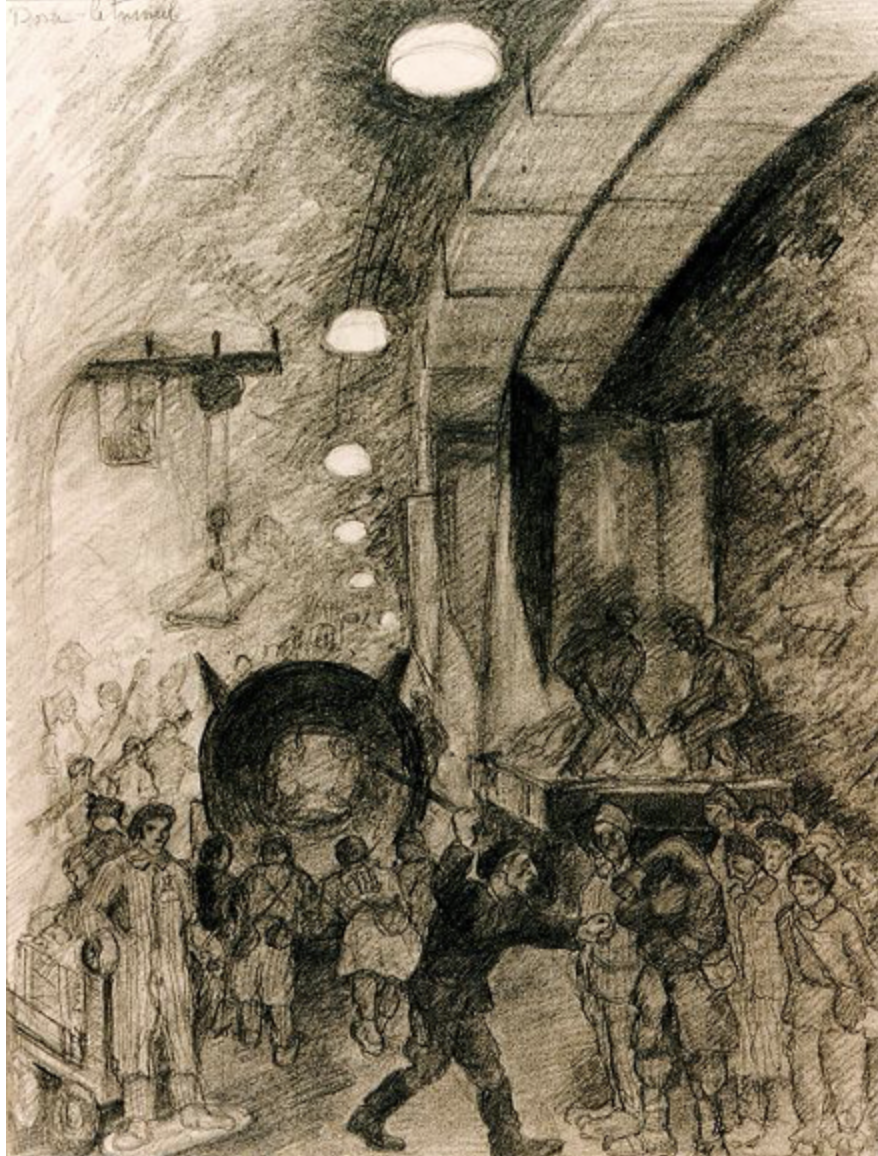
Images of Dora
With camera and pencil, artists documented Dora and presented the perspective of the regime and its victims. Some artists left powerful visual evidence of the ambition and efficiency of the high–tech V–2 program and the efforts to sanitize its brutality. Others recorded the intense suffering and death of the prison laborers.
Image: Scene from the Underground Tunnels, featuring a Train Platform, Transport Workers, and a Kapo Wielding his Stick to Enforce Order. Léon Delarbre. Courtesy of Musée de la Résistance et de la Déportation, Besançon.
-
Remembering Dora-Mittelbau
In the early morning of April 11th 1945, the Third Armored Division, specifically Task Force Welborn from the north and Task Force Loveday from the south, led the capture of what they thought was a prisoner-of-war camp. After a few light skirmishes the nearby town of Nordhausen (in Northern-Central Germany) was secured. Once Nordhausen was seized 3AD units investigated rumors of a prisoner camp on the outskirts of the town. First person accounts note the bewilderment and nausea that the soldiers experienced upon finding the concentration camp.
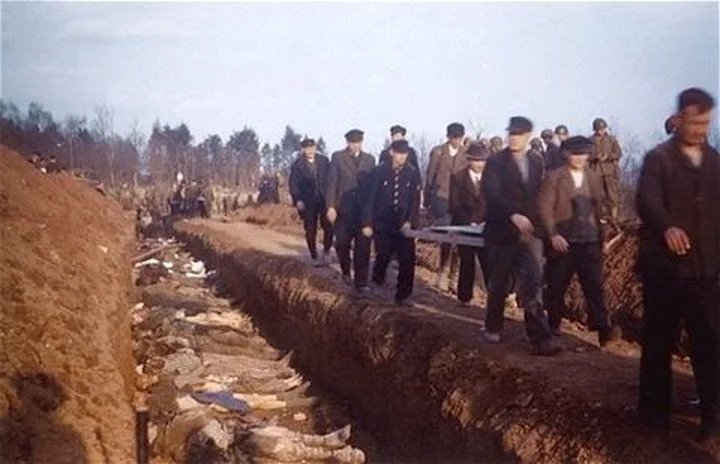
Image: Citizens of nearby Nordhausen dig mass graves, April 11, 1945.
-
Satellite Camp Wiener Neustadt
In March 1943, the iron hull of the factory hall was completed, and a topping out ceremony was held, with “prominent Nazis” present. Despite being not quite completed, the so-called “Serbenhalle” was immediately equipped with a heavy-current electric barbed wire fence. The following summer, the northern half was completed, and on 20 June 1943, the first Wiener Neustadt Subcamp was “inaugurated” with a first prisoner transport. After an air raid a few months later - on 20 November 1943 - it was closed down. The second time, prisoners arrived at Wiener Neustadt Subcamp on 5 July 1944. In April that year, the use of forced-labour prisoners in Wiener Neustadt was once again authorised.
-
Sabotaging the German V-2 Rocket
Jewish slave laborers were brought to the Mittelbau-Dora concentration camp, a satellite of Buchenwald, where they were forced to build the V-2 ballistic rocket, the brainchild of aerospace engineer Werner von Braun who was then working for the Nazis. Around 60,000 prisoners passed through the Mittelbau camps between August 1943 and March 1945. Two hundred Jewish inmates chose to sabotage the creation of the V-2 bomb.
-
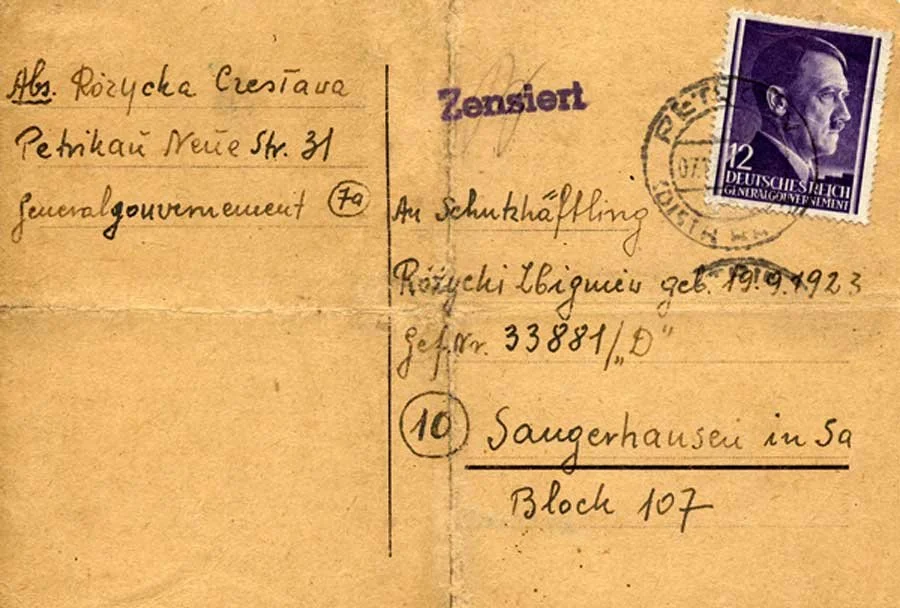
Philatelic Materials
Postcards and Camp Currency
-
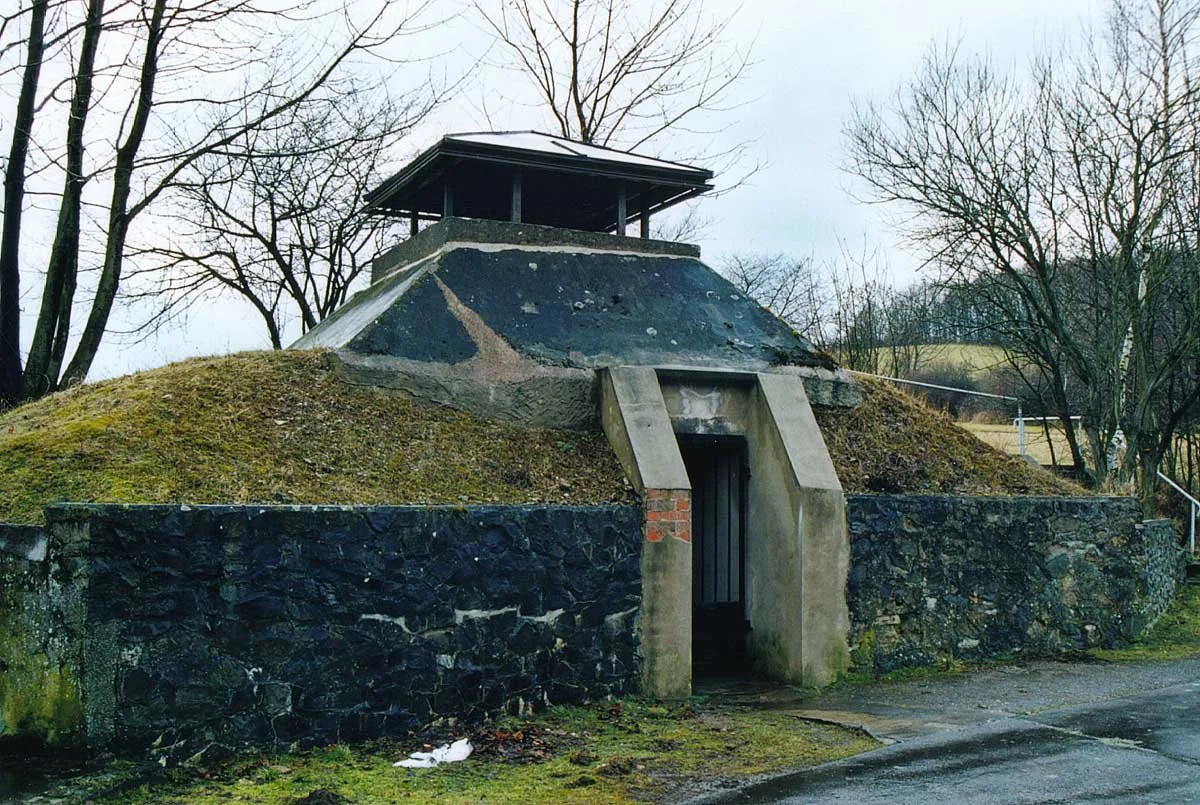
Mittelbau/Dora Today - After 50+ Years
Today, a visit to Camp Dora and the Mittelwerk tunnels can be described as a haunting experience. On the day the images below were photographed the weather was appropriately overcast and raining, which added to the overall sad feeling that was experienced. With the exception of the buildings cleared from their foundations in the 1960s, the remains of the prisoner camp—along with the interior of the manufacturing tunnels—are surprisingly intact even after 60+ years. The odd silence of the surroundings only amplified the reality of what had occurred here more than 50 years ago.
All photographs copyright Ed Straten
-
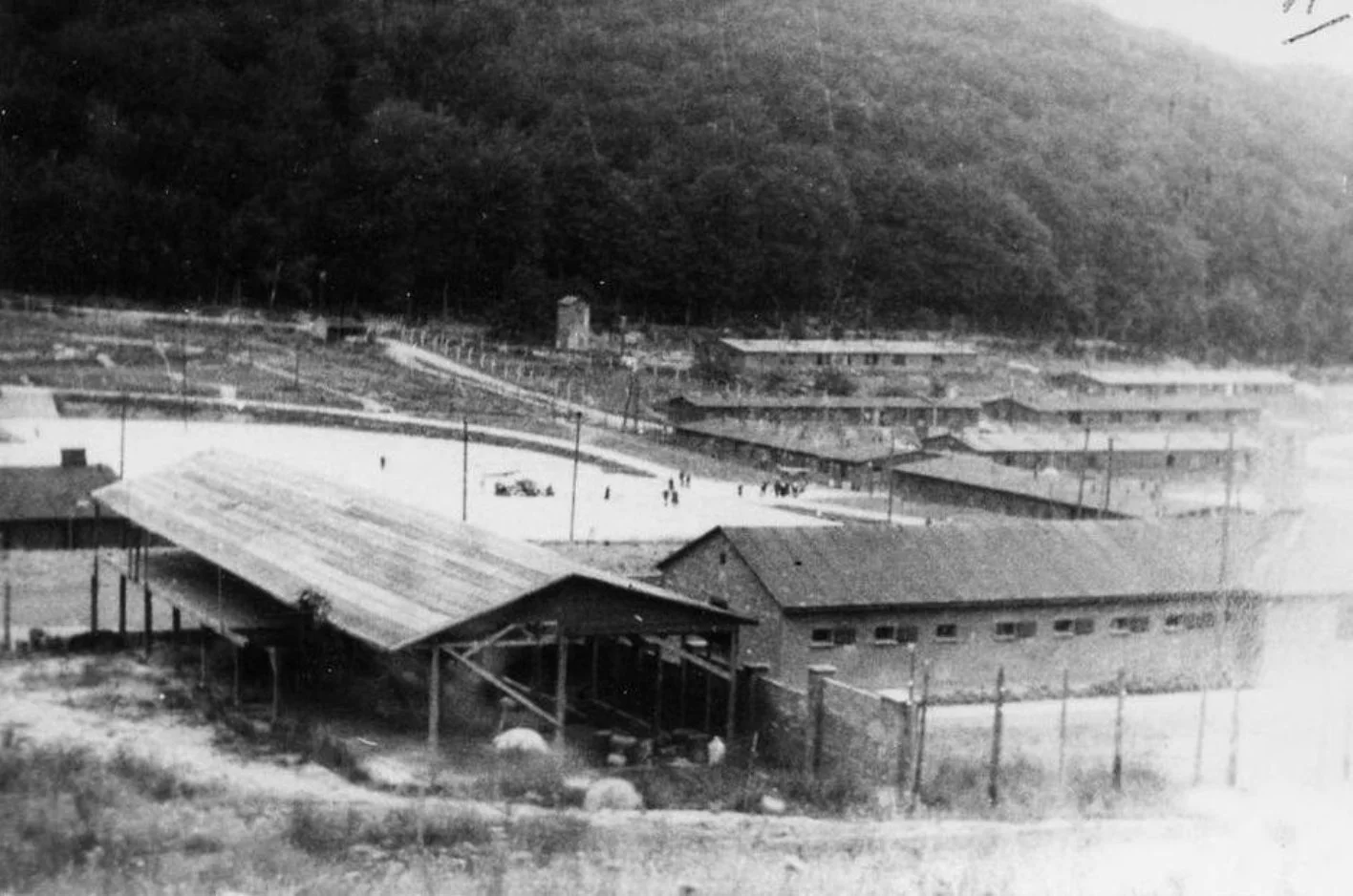
Roll Call Square
Roll call was conducted regardless of the weather conditions. The daily ordeals associated with roll call further weakened the already exhausted and insufficiently clothed inmates. During such roll calls, which often lasted hours, inmates often collapsed from fatigue or were brutally beaten by members of the SS.
Some gallows also stood on the roll call square, which the SS used to execute prisoners whom they accused of sabotage or a flight attempt. Mass hangings, which inmates were forced to watch, served as intimidation.
-
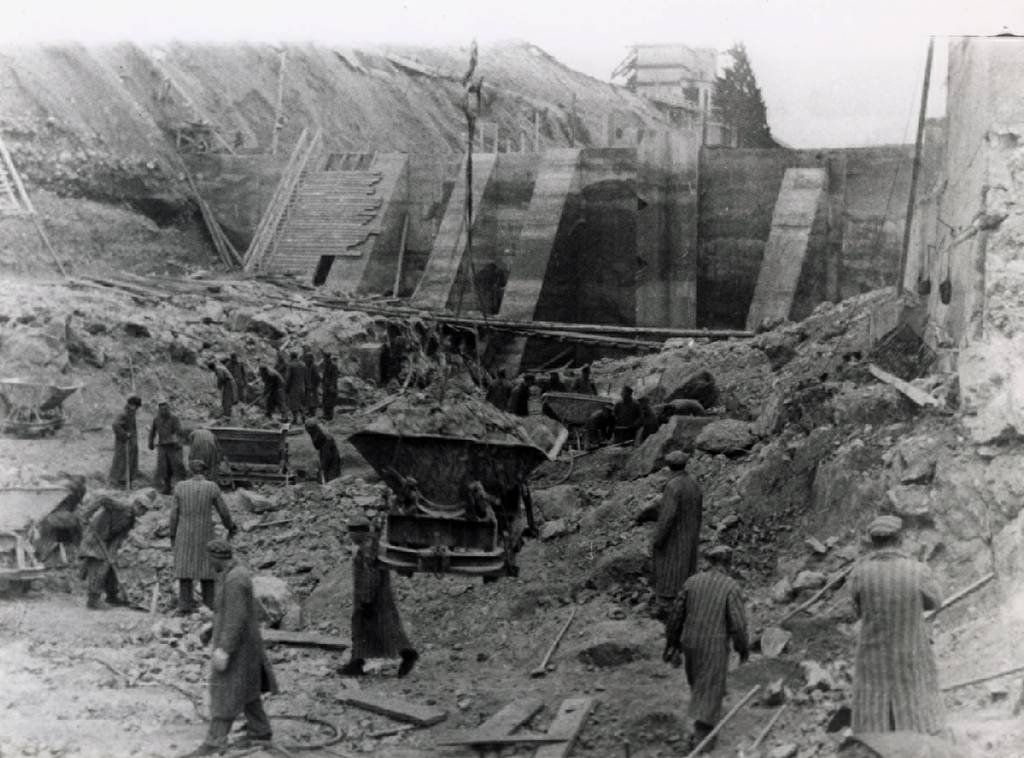
Forced Labour in the Arms Industry
Until 1942, work was mainly used in the concentration camps as a form of punishment or even extermination; to the National Socialists, repression was more important than economic output. Only when the war led to a labour shortage was there a shift in the function of the concentration camps. The Nazi leadership now developed a plan for utilising concentration camp prisoners in the German war industries.
-
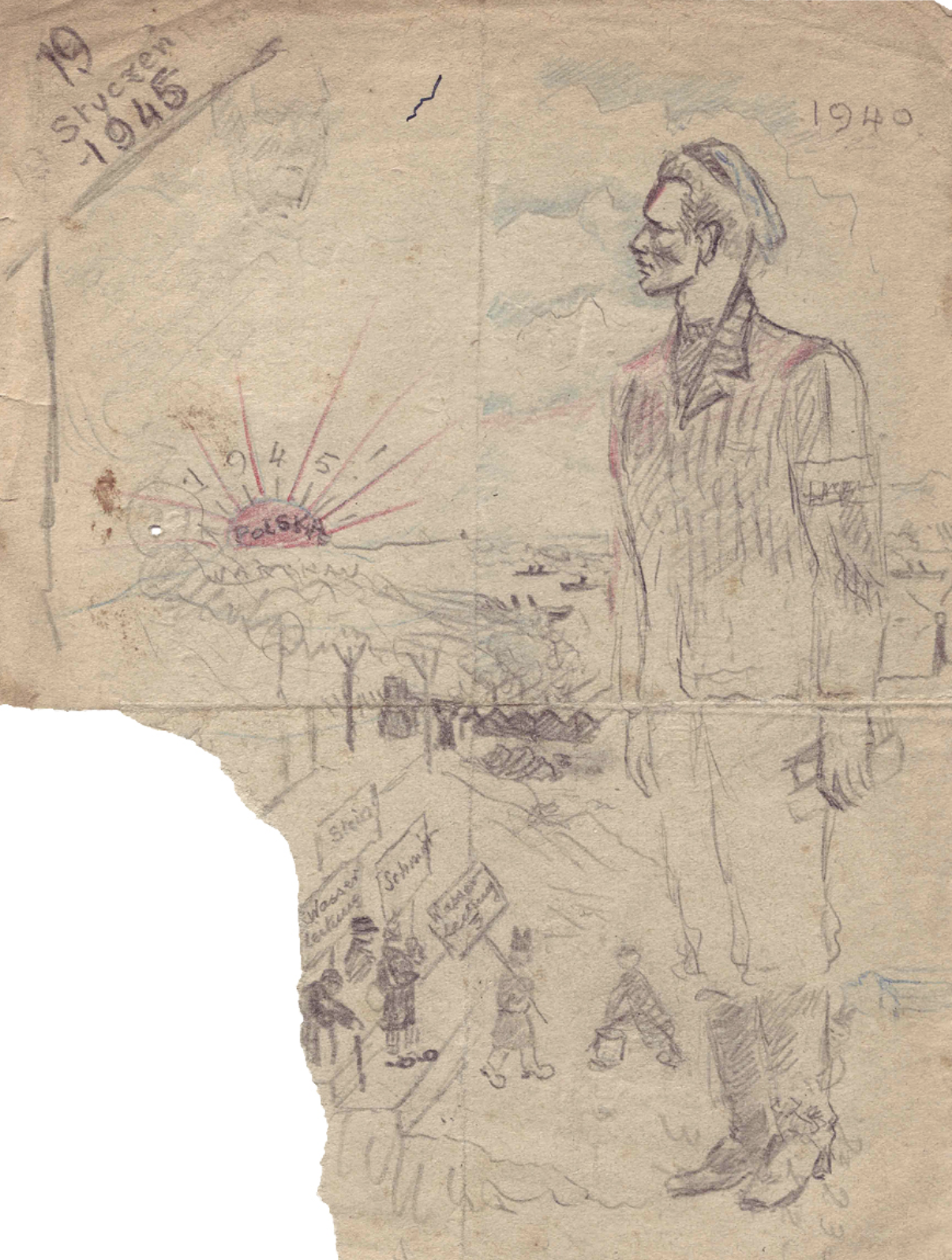
The Final Months of the Buchenwald and Mittelbau-Dora Concentration Camps
The inmates in the Holzen subcamp followed the Allied advance with a mixture of hope and anxiety. On 12 January 1945, the Soviets launched the winter offensive that brought the Red Army ever closer to the Oder and the Neisse. Allied troops were also forcing the Germans back in the west.
-
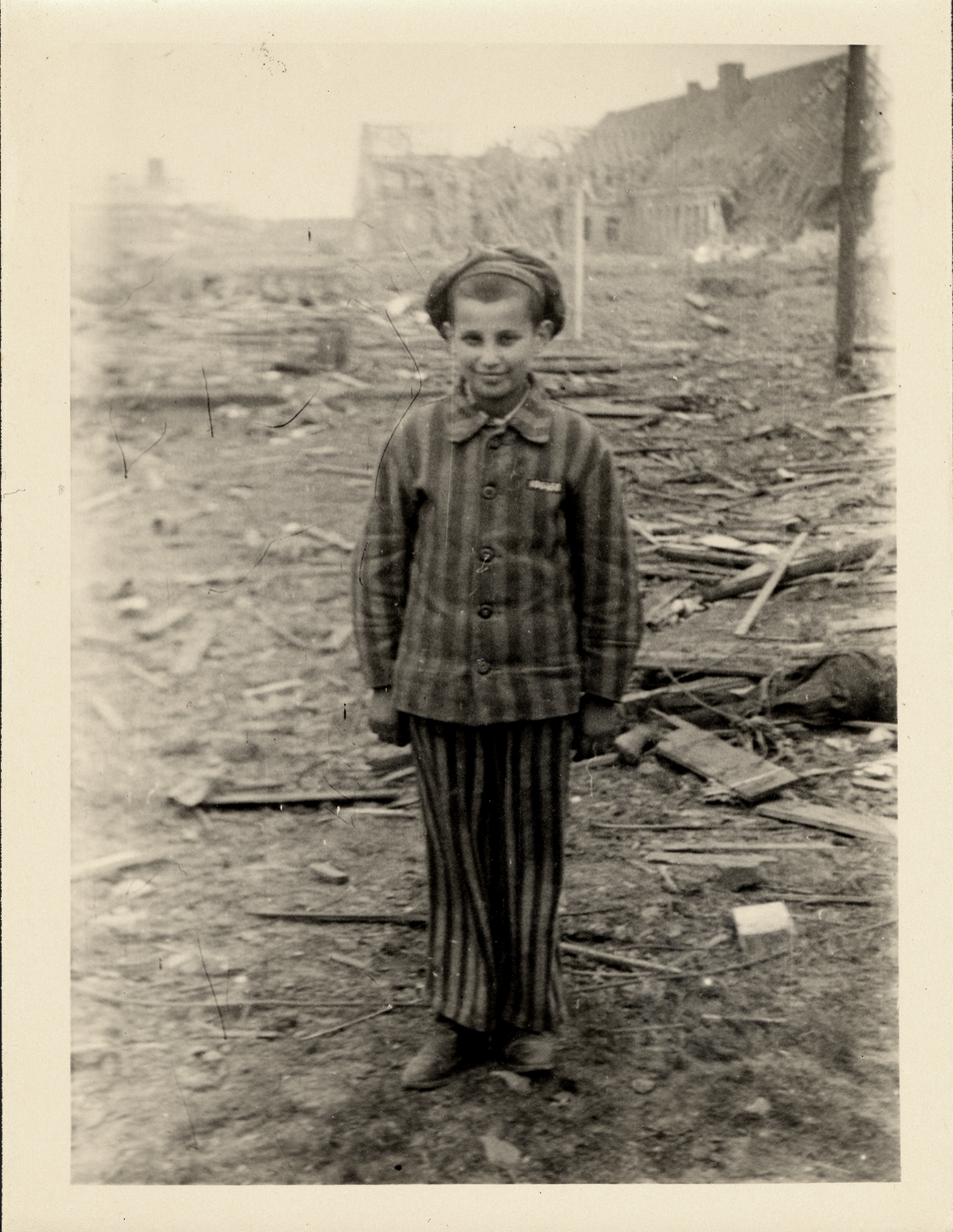
Children and Teenagers in the Concentration Camps: Butchenwald, Mittelbau-Dora
The evacuation of the “gypsy family camp” in Auschwitz-Birkenau began in April 1944. By August, the SS had transferred about 1500 male Sinti and Roma to the Mittelbau-Dora Concentration Camp. Among them were many teenagers and even some children. Almost all of them were taken to the subcamps Ellrich-Juliushütte and Harzungen, where, like the adults, they were assigned to exhausting forced labor on construction sites.
-
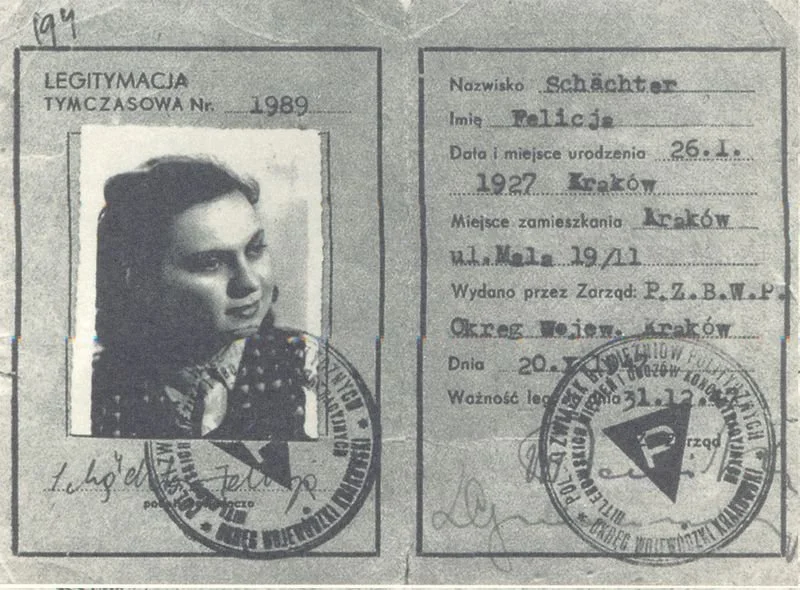
The "HASAG Leipzig" Concentration Camp Subcamp
In June 1944, the first women's subcamp of Buchenwald concentration camp was established on the grounds of Kamenzer Straße 10 and 12 (then Bautzner Straße) in the Leipzig district of Schönefeld. With more than 5,000 prisoners, the "HASAG Leipzig" subcamp developed into the largest women's subcamp of Buchenwald Concentration Camp within five months.
Image: Identity card of Felicja Karay, née Schächter, from 1947 (Leipzig Nazi Forced Labour Memorial)
-
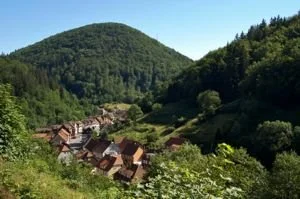
The Harz Mountains- Civilization could be seen from a distance:
The Harz Mountains are the land of German fairy tales: steep-roofed houses with tiny windows and narrow, cobblestone streets.
A world of dark forests, rushing streams and stormy mountains.
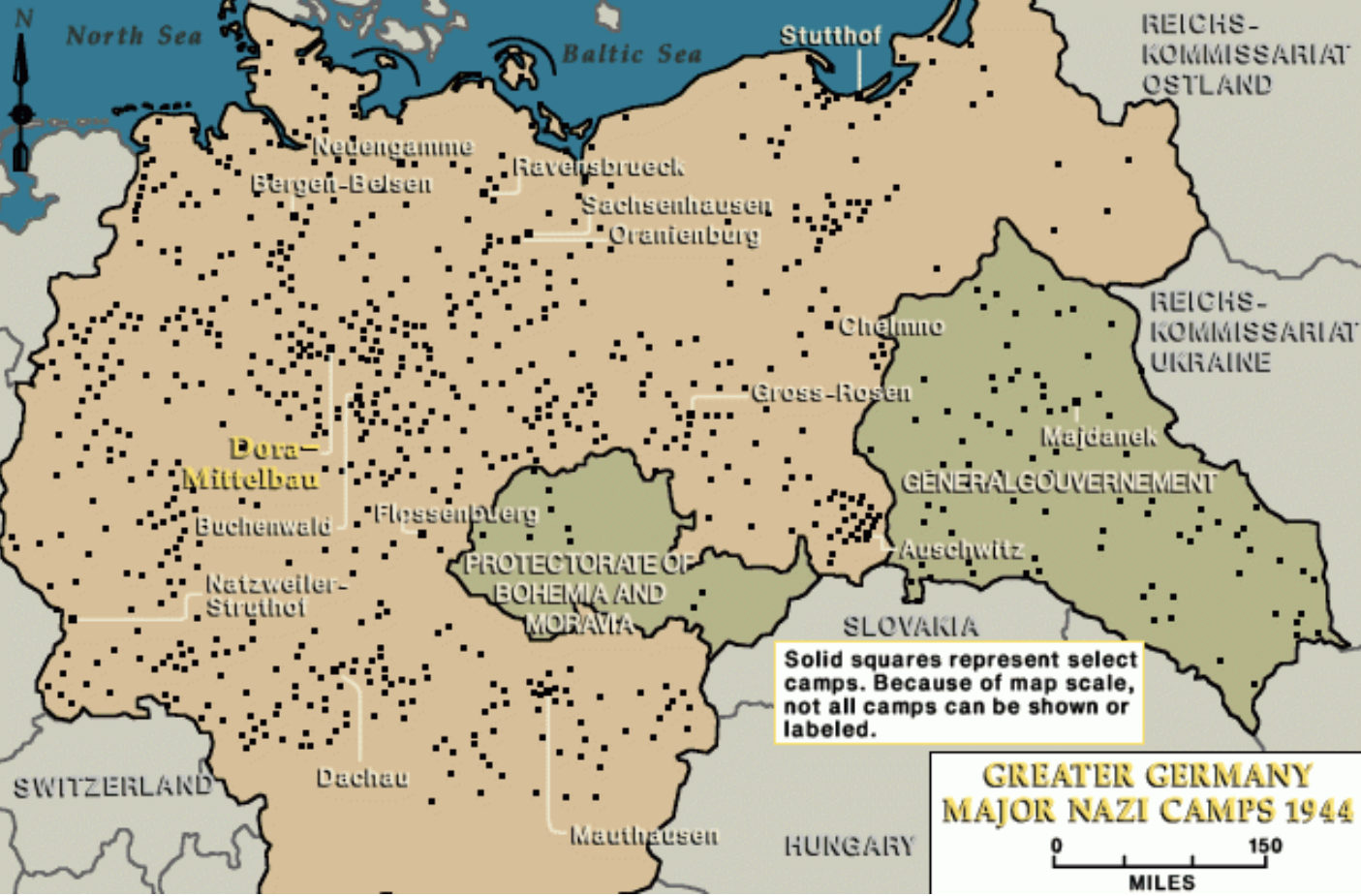
Major camps in greater Germany
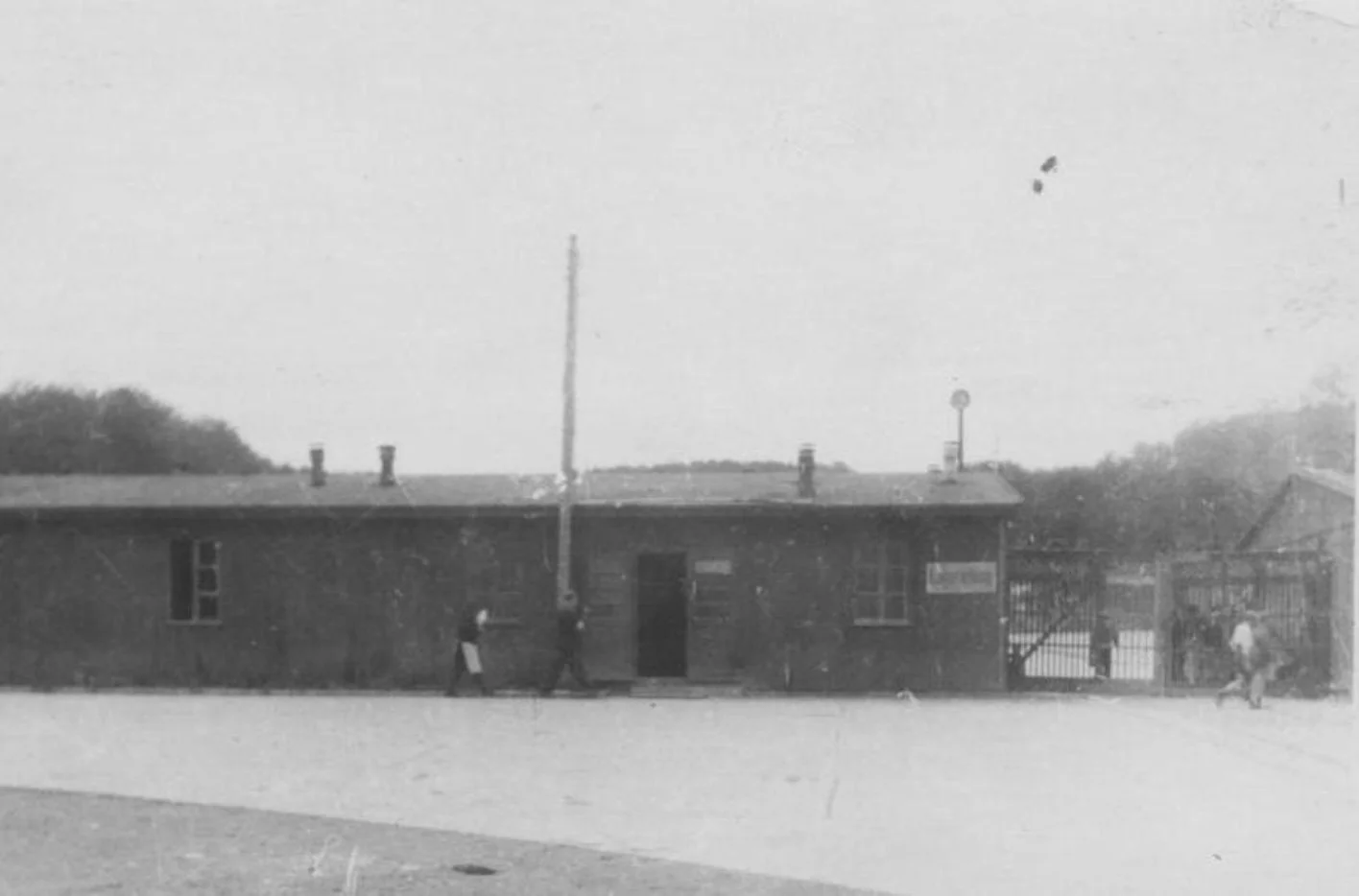
The gate at Dora-Mittelbau
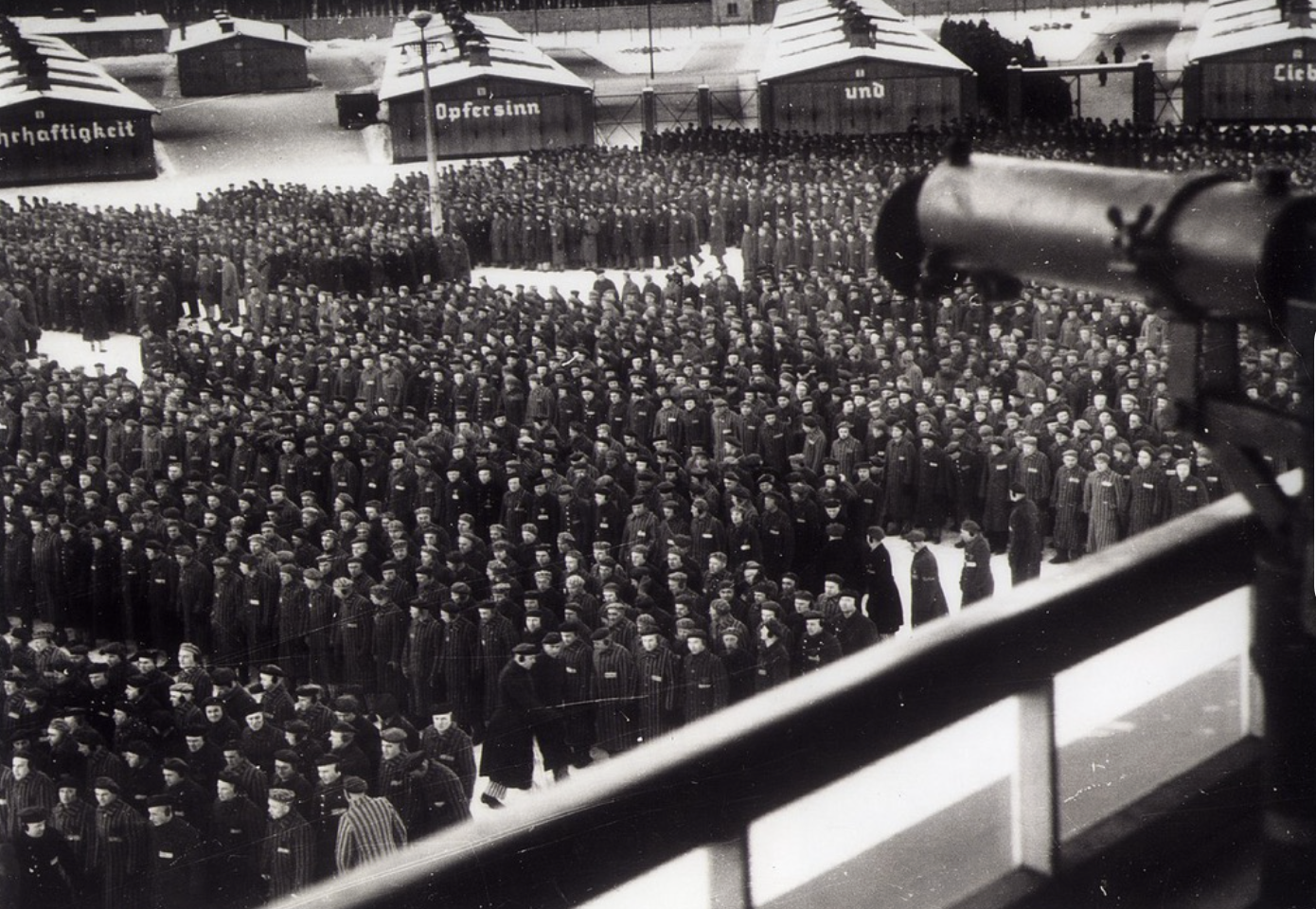
Roll call was a moment at Dora where many awful things happened, and punishments were given.
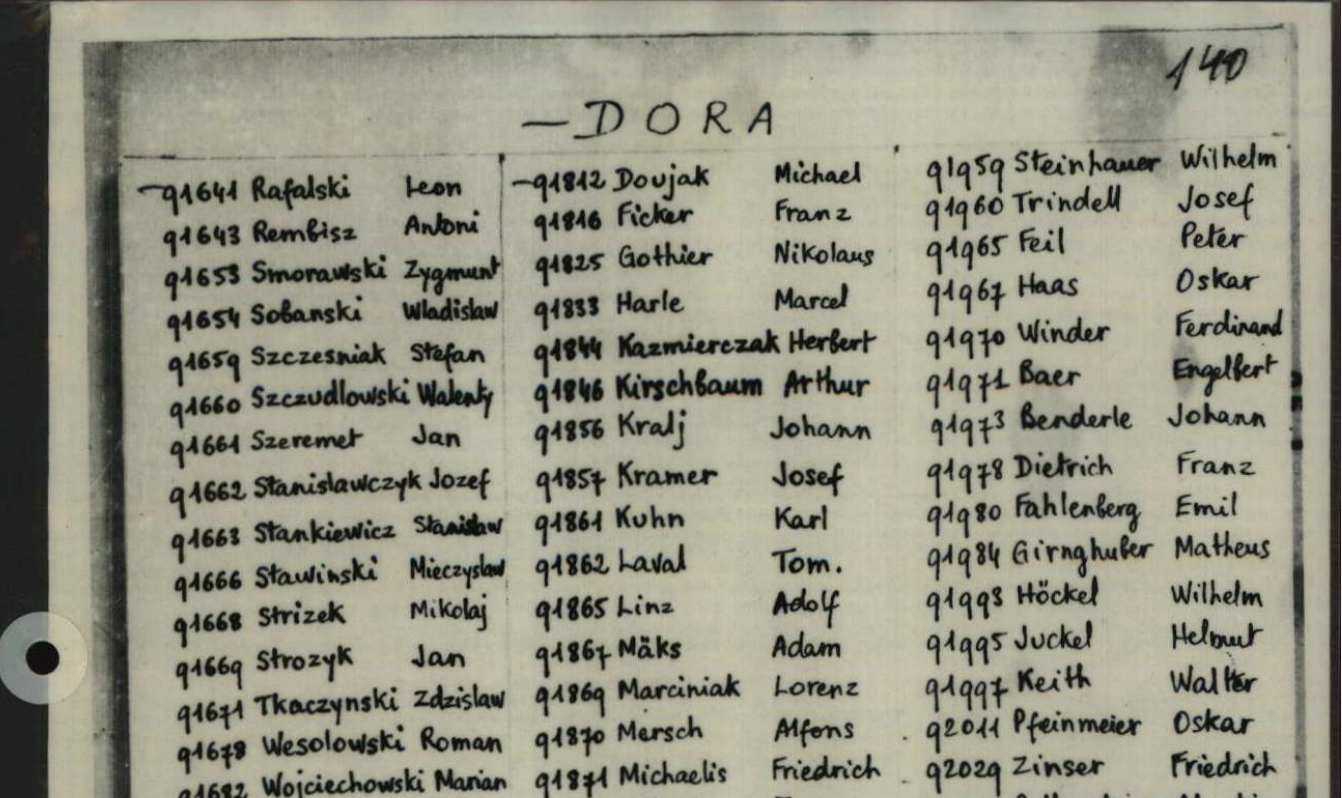
Prisoner list
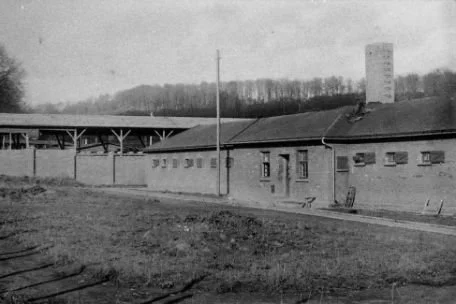
Dora-Mittelbau prison
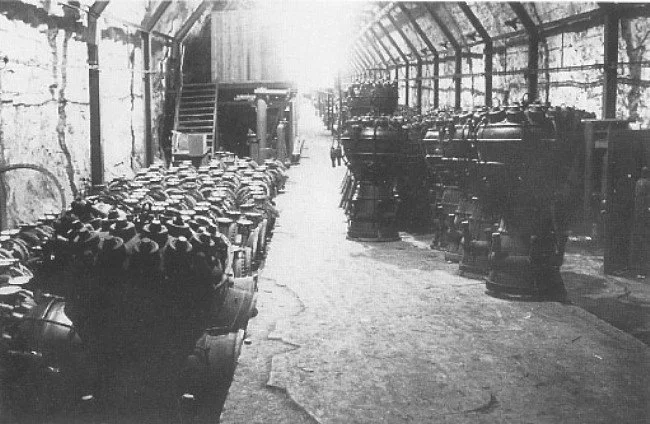
V-2 assembly at Dora-Mittelbau
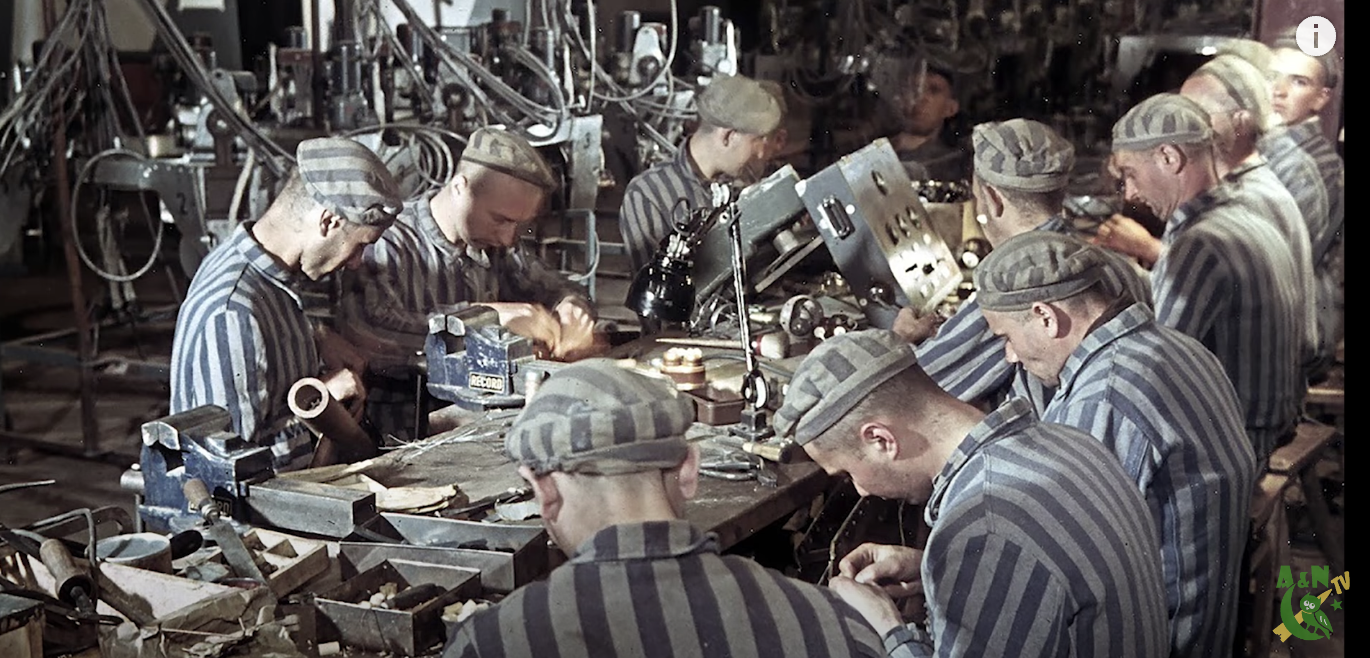
Dora-Mittelbau workers
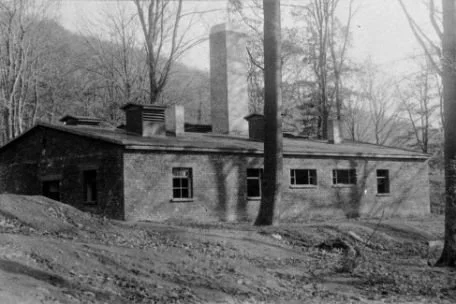
The crematorium at Dora-Mittelbau
Mittelbau
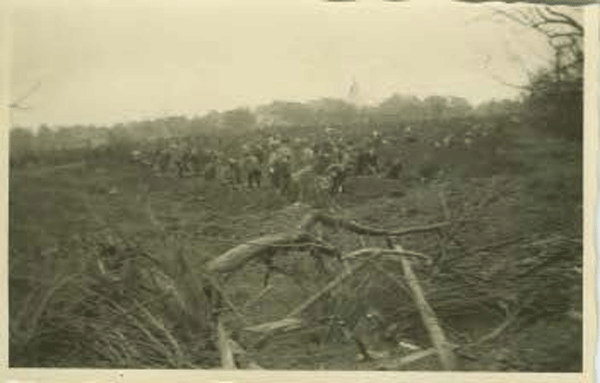
Citizens of nearby Nordhausen dig mass graves, April 11, 1945
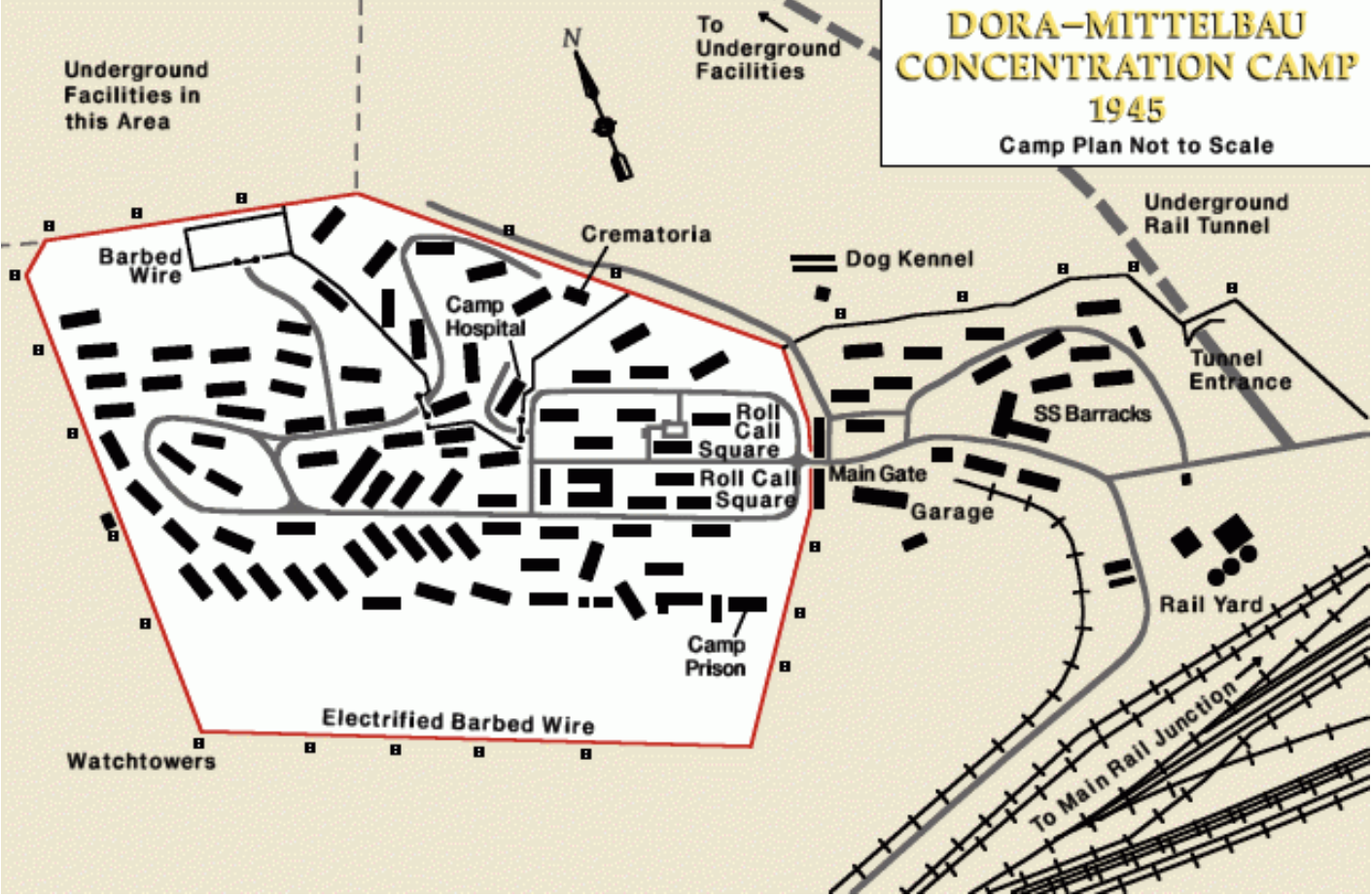
Dora-Mittelbau Concentration Camp, 1945
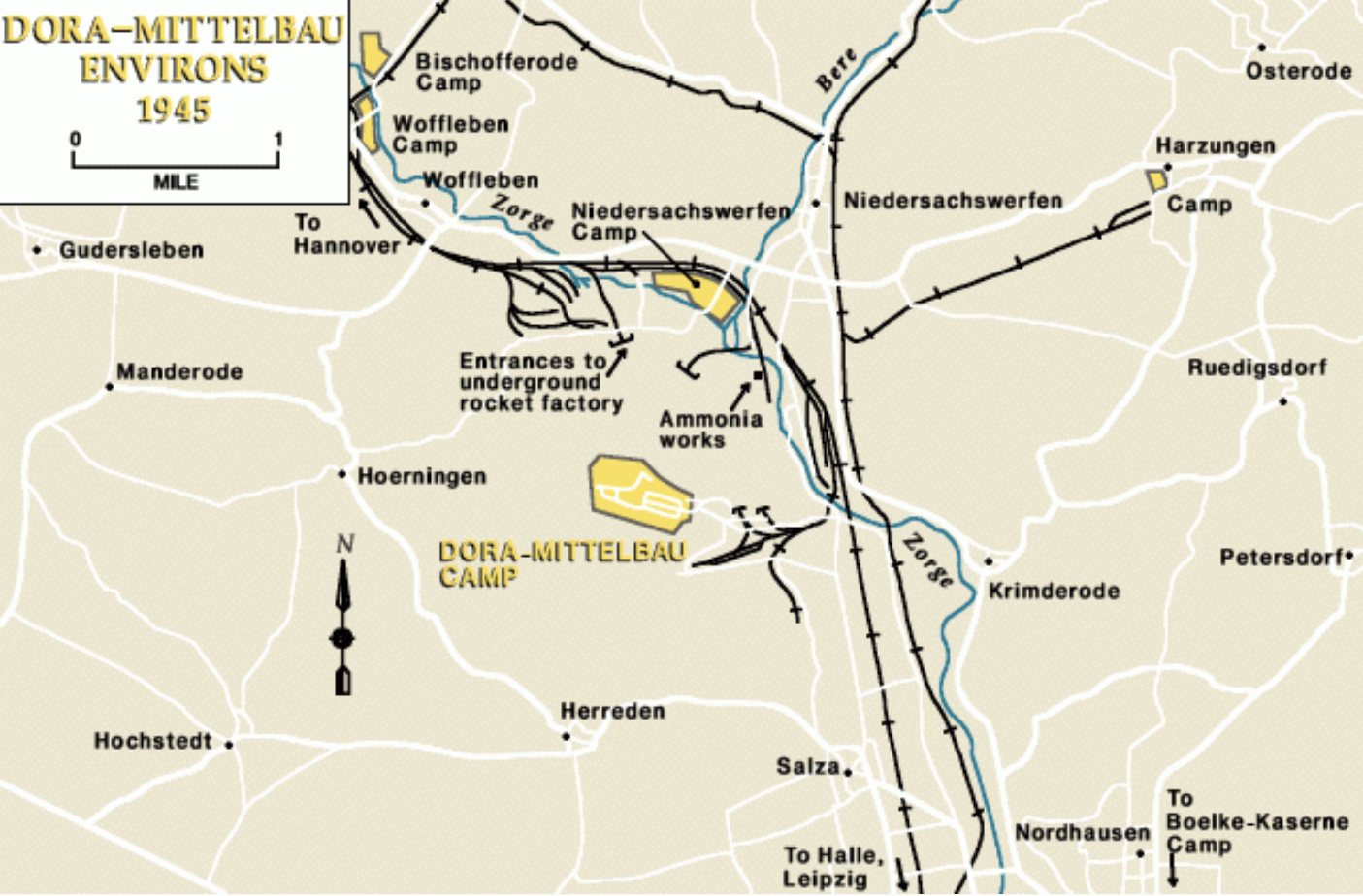
Dora-Mittelbau Environs, 1945
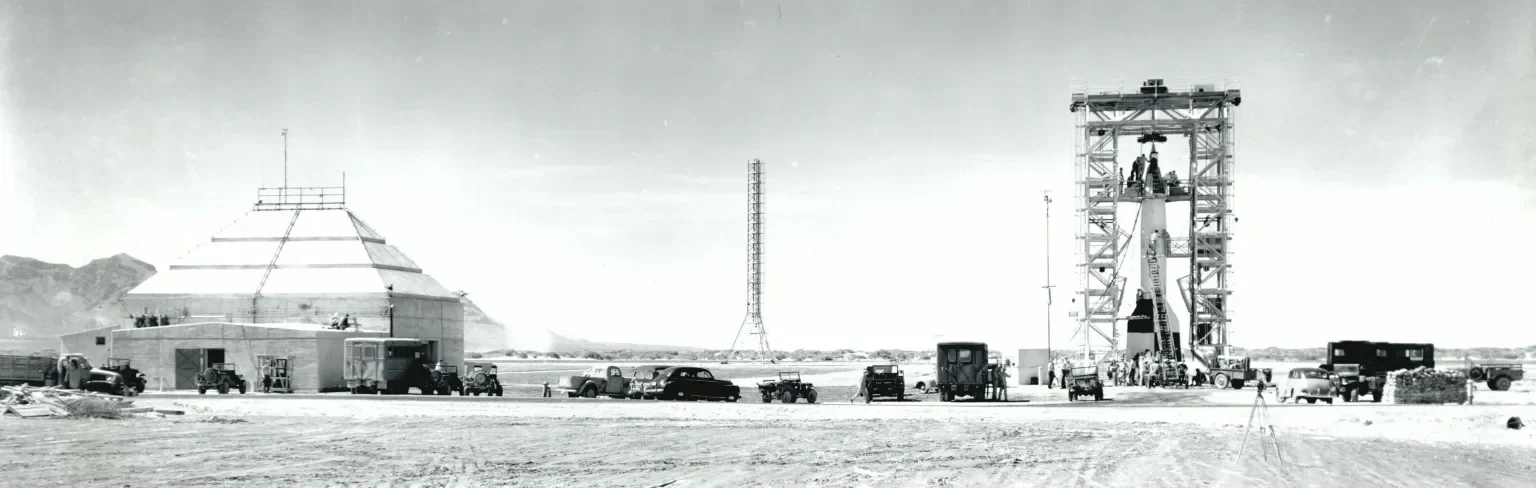
Fort Bliss, Texas
Preliminary rocket research began at the Rocket Branch, Research and Development Sub-Office of the Ordnance Department, located at Fort Bliss, during World War II. A program for research and development of long-range ballistic missiles had been initiated in 1944 between the Army Ordnance Department and scientists at the California Institute of Technology.
The three hundred freight-car loads of V-2 components arrived at White Sands by August 1945, and preparations began for assembling, testing, and firing the giant rockets. By February 1946, the 118 Operation Paperclip German specialists sent to Fort Bliss had arrived, and the rocket program began in earnest. Over the next few years, additional arrivals brought the group to about 127. These new arrivals were either original specialists slow in coming, or new additions to the Paperclip project. At first, the specialists were confined to a six-acre ordnance area. They lived and worked in World War II-era barracks and workshops.
From Operation Paperclip at Fort Bliss: 1945-1950
By Susan I. Enscore, Cultural Resources Research Center, US Army Construction Engineering Research Laboratories, and written for the Conservation Division, Directorate of Environment, Army Air Defense Artillery Center, April 1998
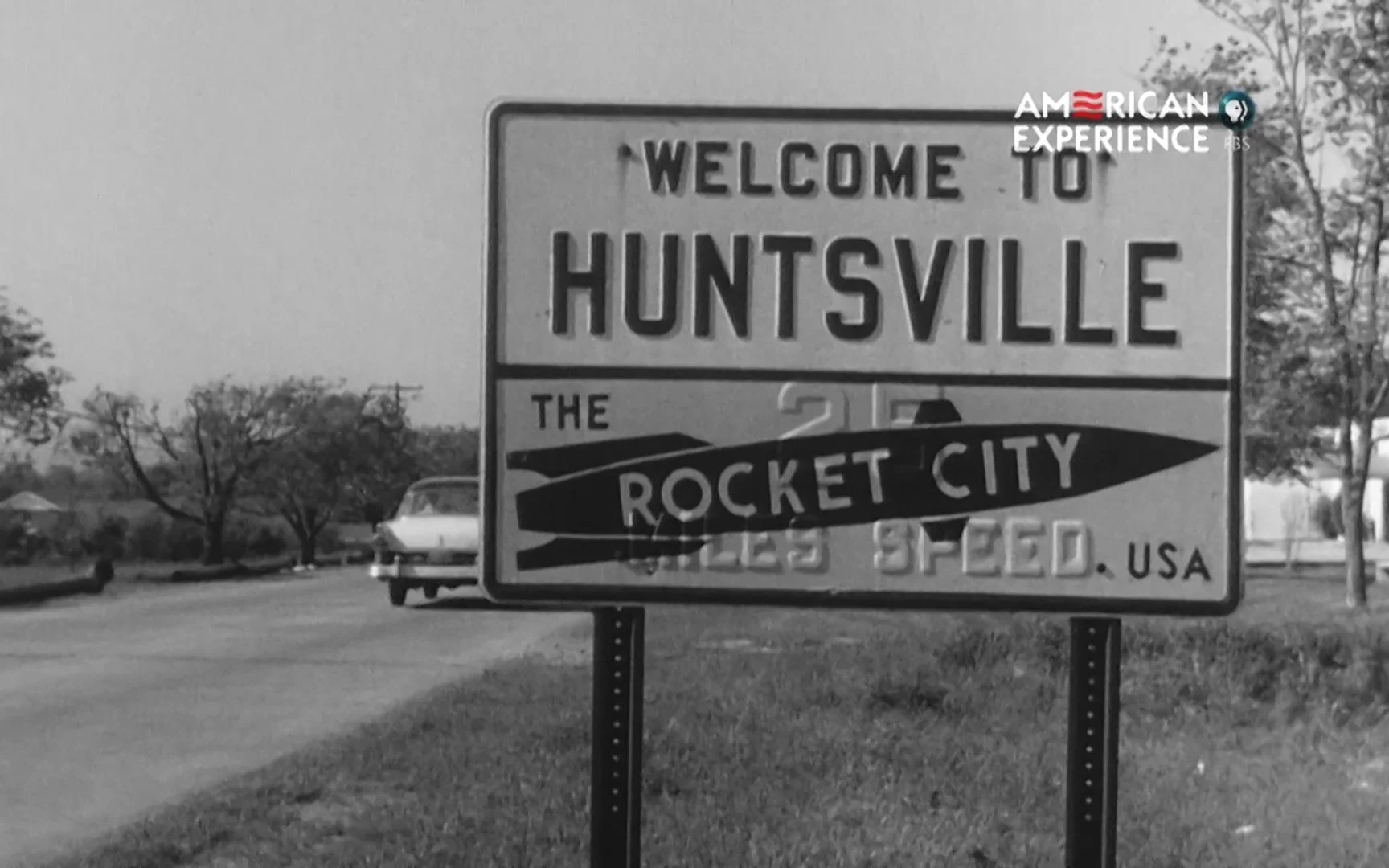
Huntsville
After World War II, Huntsville’s Redstone Arsenal was largely vacant, and the Army took advantage of the situation to begin doing rocket and missile work there. Leveraging that early work, a team of German rocket scientists, led by Wernher von Braun, were based at Redstone Arsenal, as part of the Army Ballistic Missile Agency. Even before NASA, the ABMA secured Huntsville’s reputation as the Rocket City – they were responsible for the rocket that launched Explorer 1, the first American satellite, and for the Redstone rocket that made Alan Shepard the first American in space.
NASA was formed months after Explorer 1 was launched, and two years later the ABMA was transferred to NASA to form a new NASA field center located on Redstone Arsenal, the Marshall Space Flight Center. The center was founded on July 1, 1960, and named in honor of General George C. Marshall, the military leader who won the Nobel Peace Prize for initiating the Marshall Plan for restoring Europe after World War II – just as General Marshall had made the transition from war to peace, so too would the ABMA as a new NASA center.
From NASA's Marshall Space Flight Center Celebrates 60 Years
By David Hitt, Huntsville/Madison County Convention & Visitors Bureau, Feb. 05, 2020
-
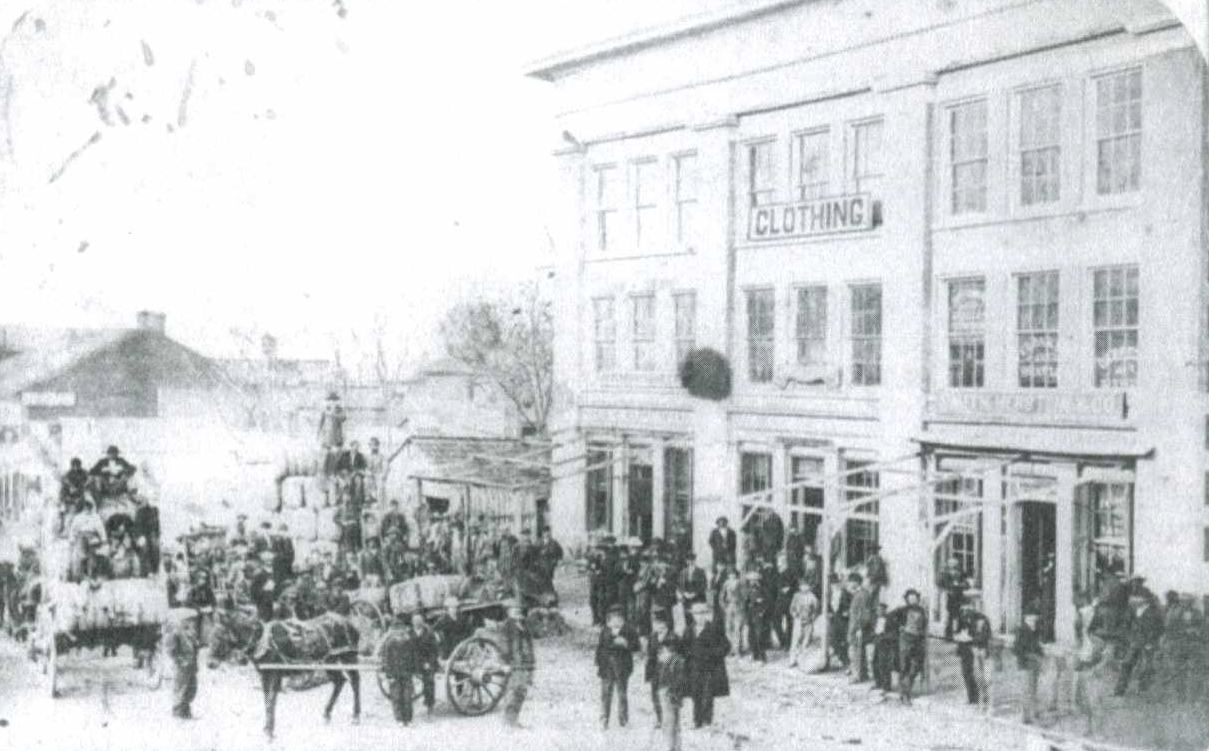
The Jewish Community of North Alabama: A Brief History
Alabama is probably not the first place that comes to mind when you think about the Jewish experience in the United States, but it turns out that Jews have been a presence in the state's history going hack quite a long way. The earliest reference is unfortunately a negative one, involving a 1724 decree by the French governor of the Mobile region ordering the expulsion of Jews and restricting religious worship to Roman Catholicism.
On a more positive note, individual Jewish merchants and entrepreneurs began settling in Alabama as early as 1800, one of them, Abraham Mordecai, building the state's first cotton gin in 1802 near the junction of the Coosa and Tallapoosa Rivers. By around 1850 there were established Jewish communities in Mobile and Montgomery, each with their own synagogues.
-
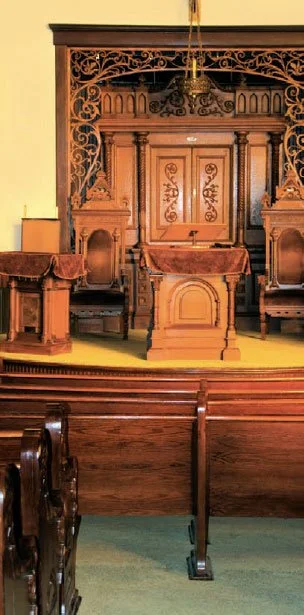
The Huntsville Jewish Heritage Center – Huntsville’s Museum with a Mighty Purpose
The Huntsville Jewish Heritage Center at the Temple B’nai Sholom explains the religion and traditions of Judaism, provides a history of Huntsville’s Jewish popula-tion, and shares the many contributions of the Jewish community to Huntsville’s civic and cultural life. Located in the original study used by Temple rabbis, the artful displays of the Heritage Center weave together an overarching narrative that offers great insight into the Jewish religion and asks visitors of all faiths to reflect upon the beliefs shared in common.
-
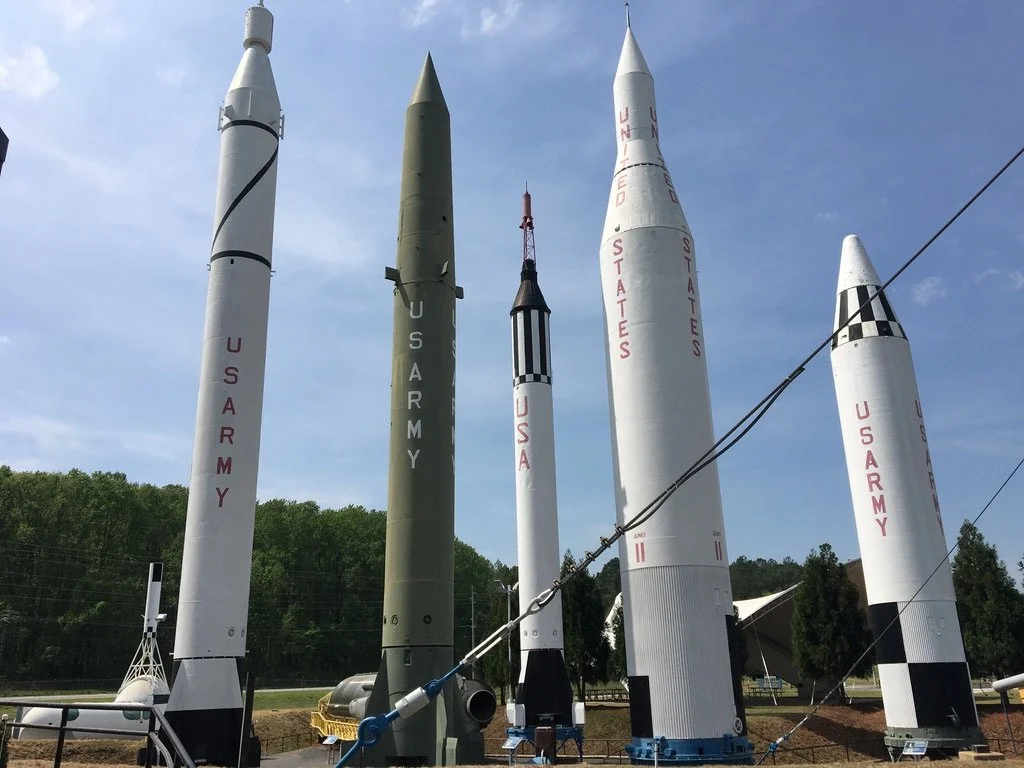
U.S. Space & Rocket Center
Home to four incredible STEM education programs—Space Camp®, Aviation Challenge®, Space Camp® Robotics, and U.S. Cyber Camp®—the USSRC isn't just a museum: it's an experience.
The U.S. Space & Rocket Center annually hosts visitors from every state in the U.S. and more than 80 foreign nations who come to share the spirit of discovery through immersive education and experience. The USSRC’s large rocket and space hardware collection contains more than 1,500 items that showcase the past, present and future of human spaceflight.
-
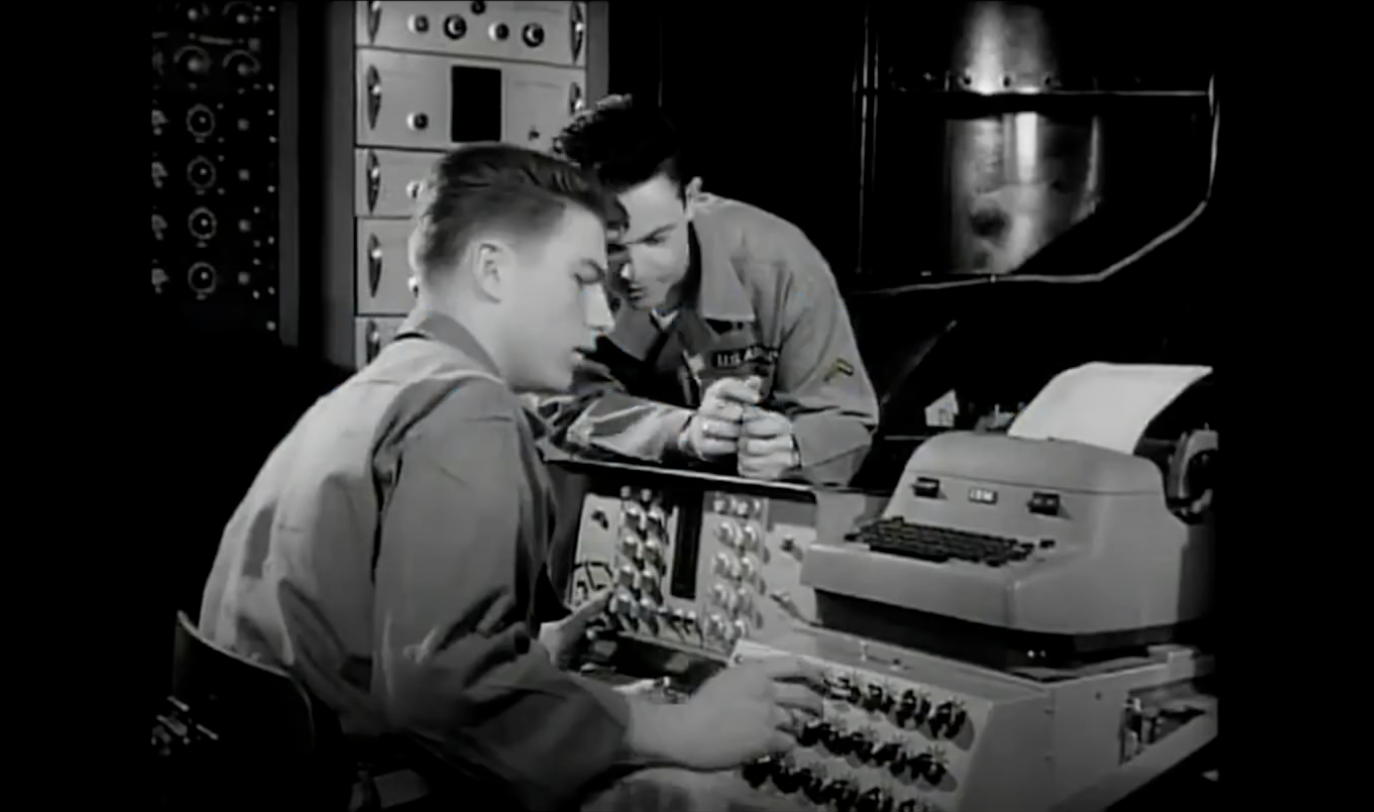
Origin of the Redstone Missile Program
A vintage 1957 film on the origin of the Redstone Missile Program. The Redstone was an example of the evolution of a military defense project turned towards civilian space exploration uses. The Redstone rocket was named for the Redstone Arsenal in Huntsville, Alabama. It was first launched in 1953. A variation of the Redstone was used to launch EXPLORER 1, the first U.S. orbital satellite in 1958. On May 5, 1961, the Mercury-Redstone version carried astronaut Alan Shepard in the “Freedom 7” capsule. Shepard became the first American in space. Two months later, Astronaut Gus Grissom became the second U.S. astronaut in space, aboard another Mercury Redstone, carrying the “Liberty Bell 7” capsule. This film shares a bit of early history of the Redstone.
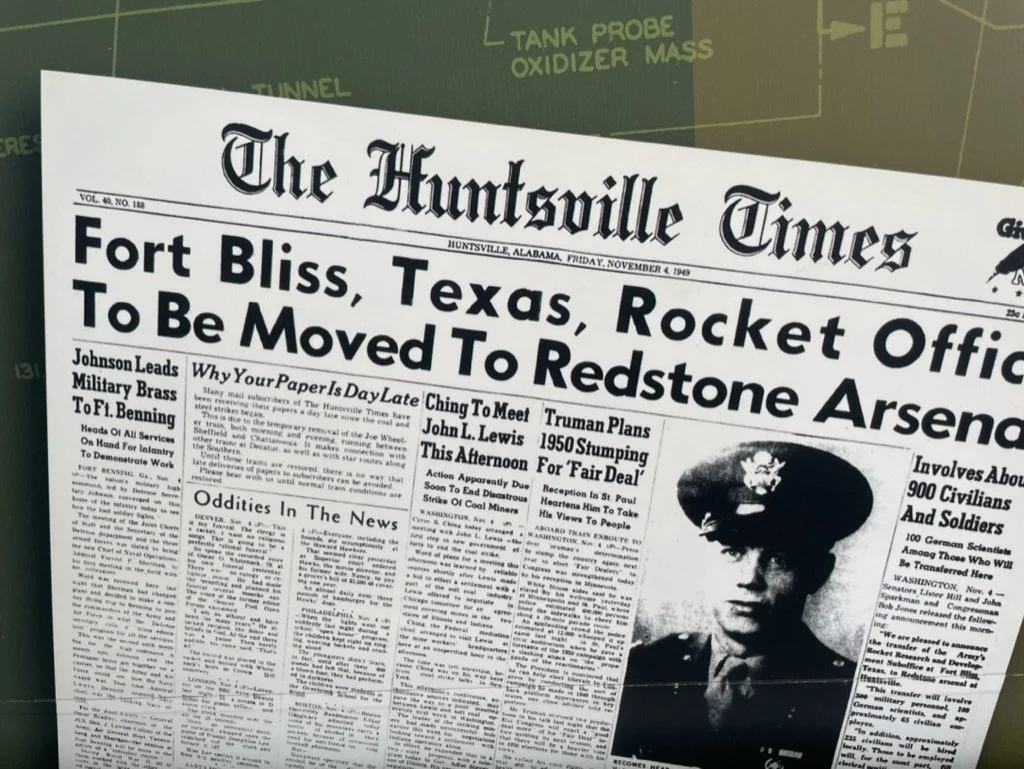
The Huntsville Times front page, Friday, November 4, 1949
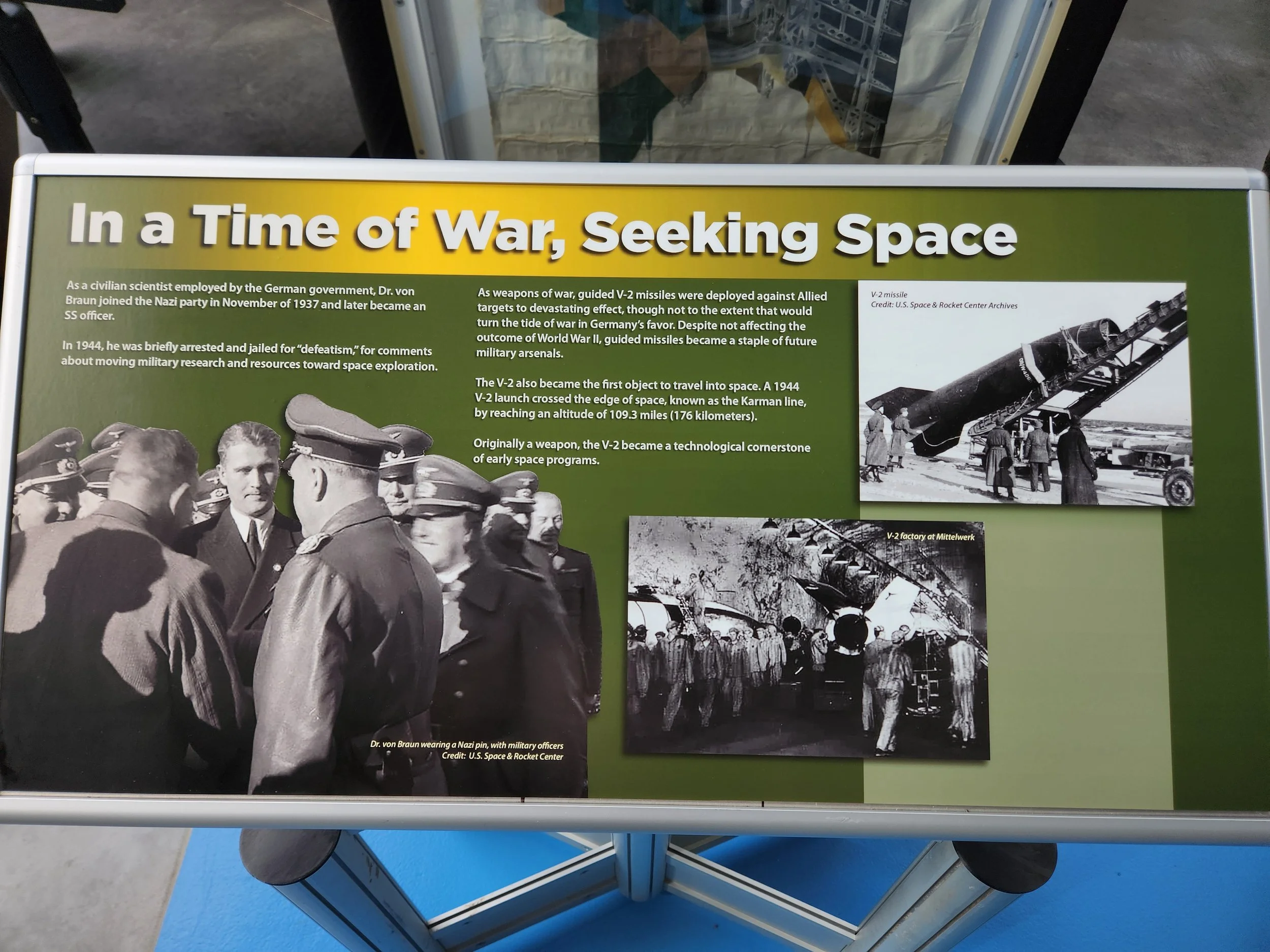
U.S. Space & Rocket Center museum exhibit
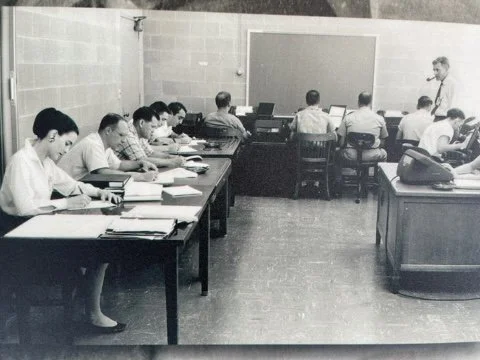
U.S. Space & Rocket Center museum exhibit
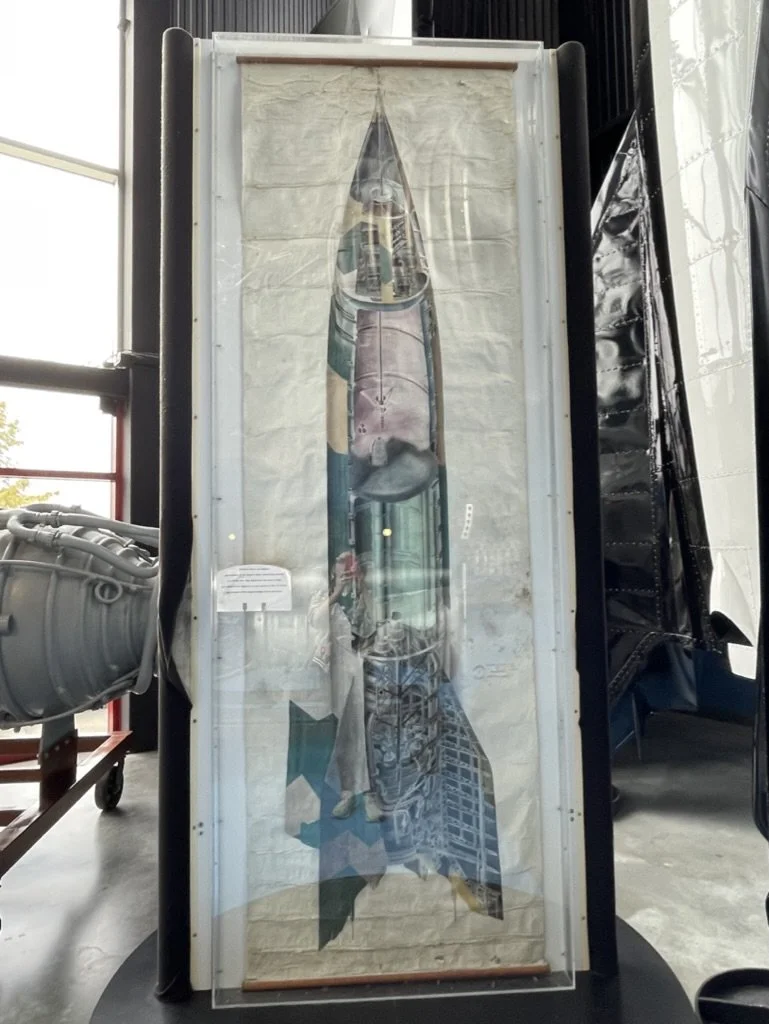
U.S. Space & Rocket Center museum exhibit
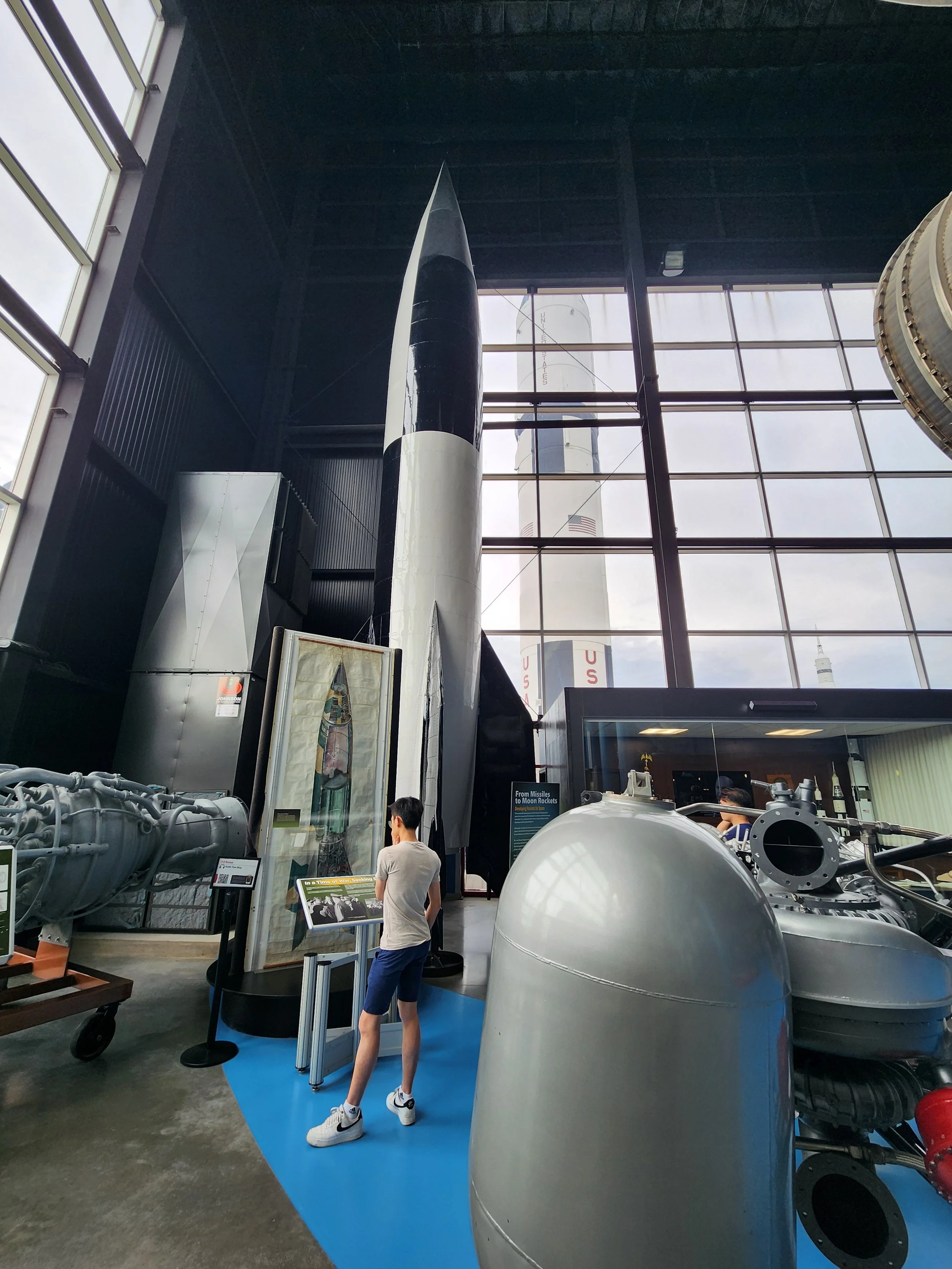
U.S. Space & Rocket Center museum exhibit
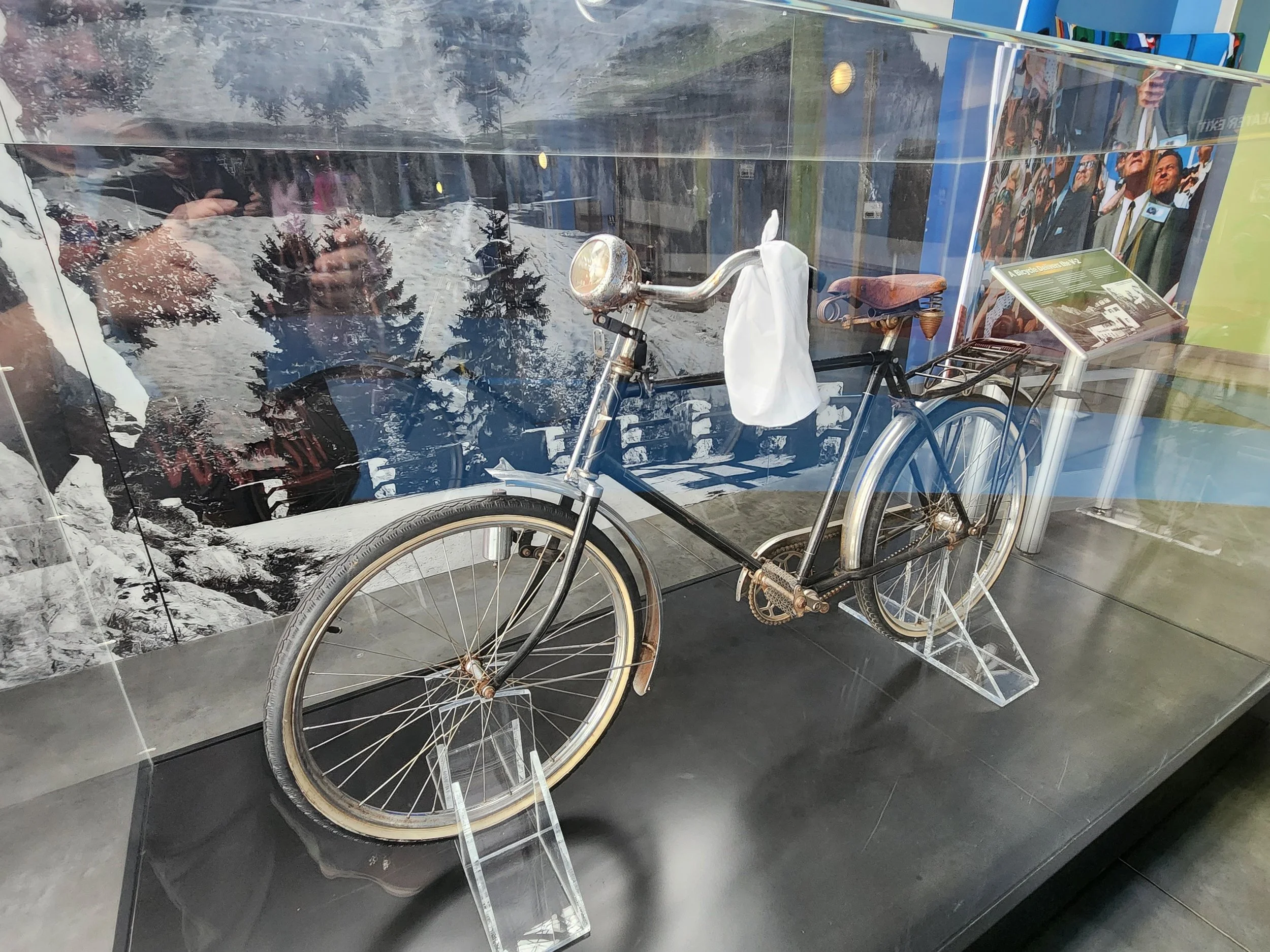
U.S. Space & Rocket Center museum exhibit
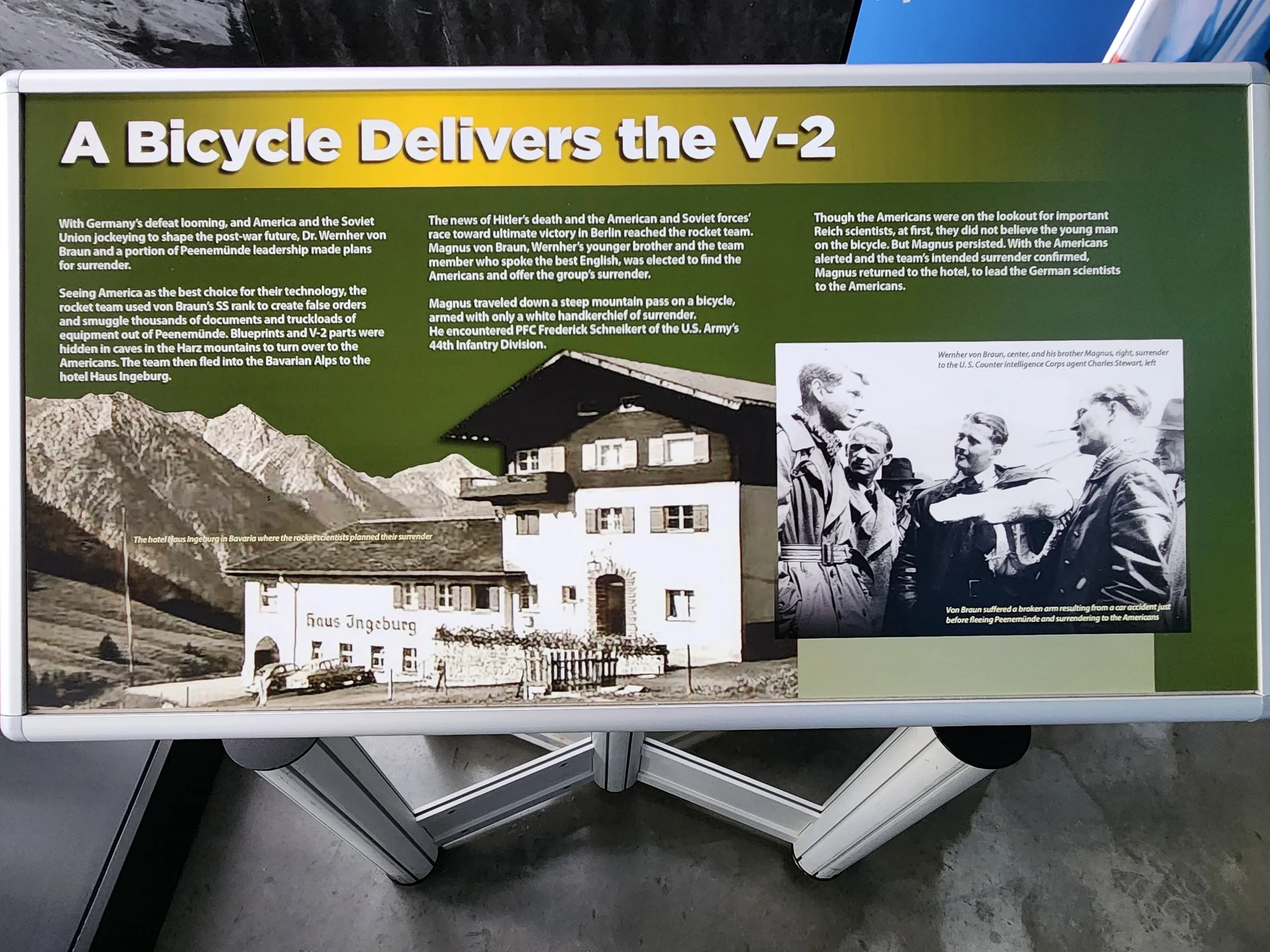
U.S. Space & Rocket Center museum exhibit
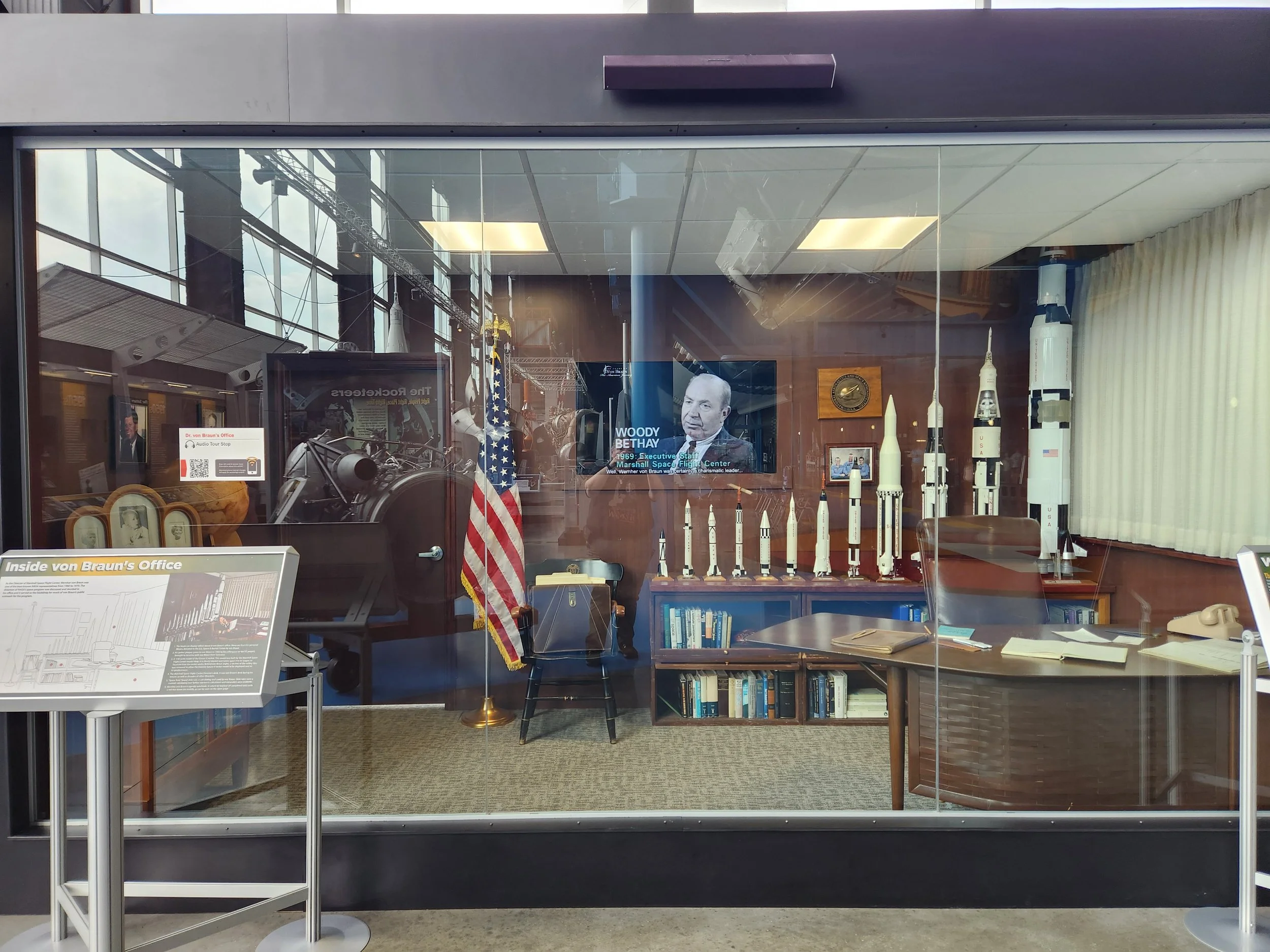
Werner von Braun's office recreation at U.S. Space & Rocket Center
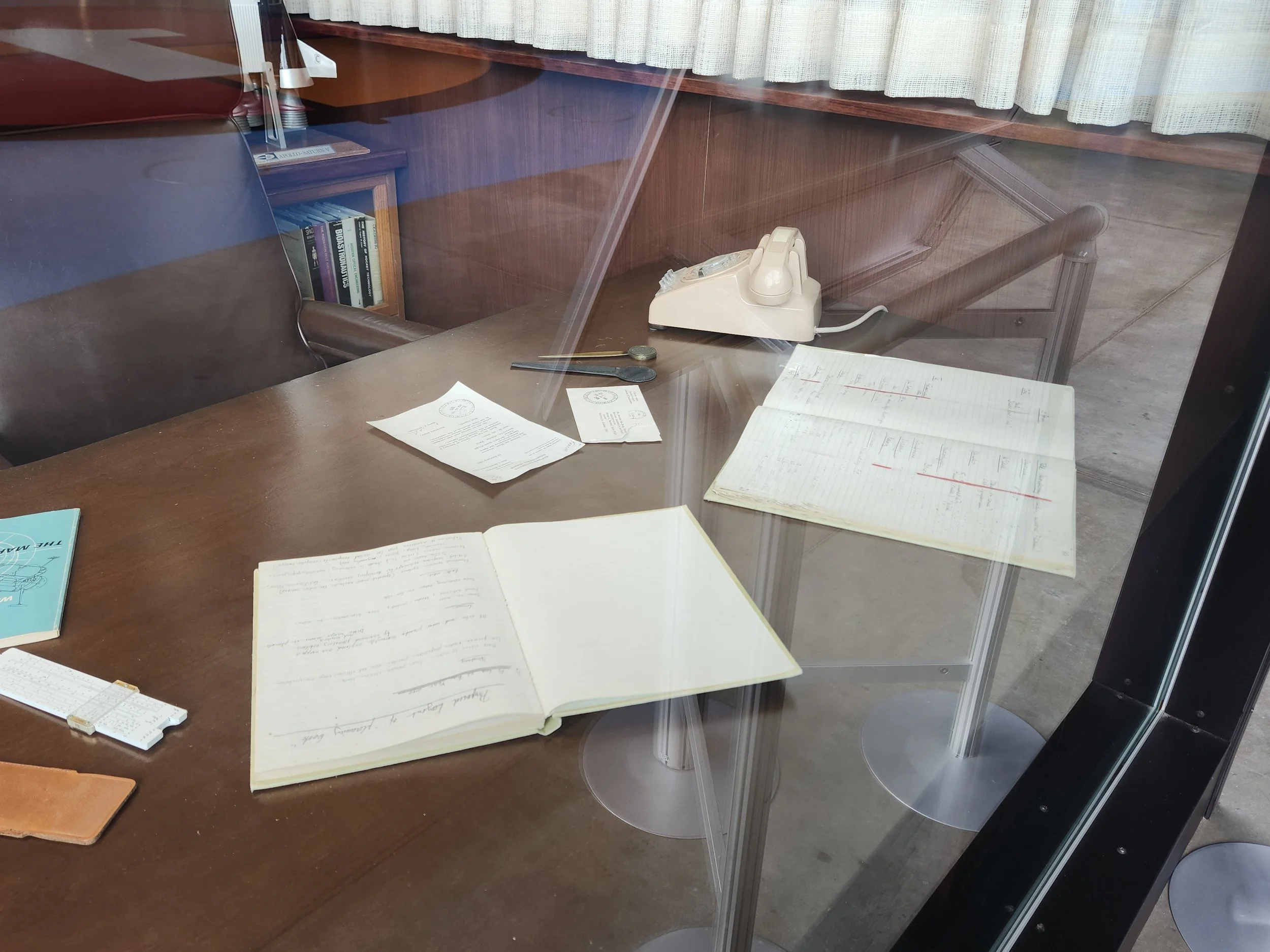
Werner von Braun's office recreation at U.S. Space & Rocket Center
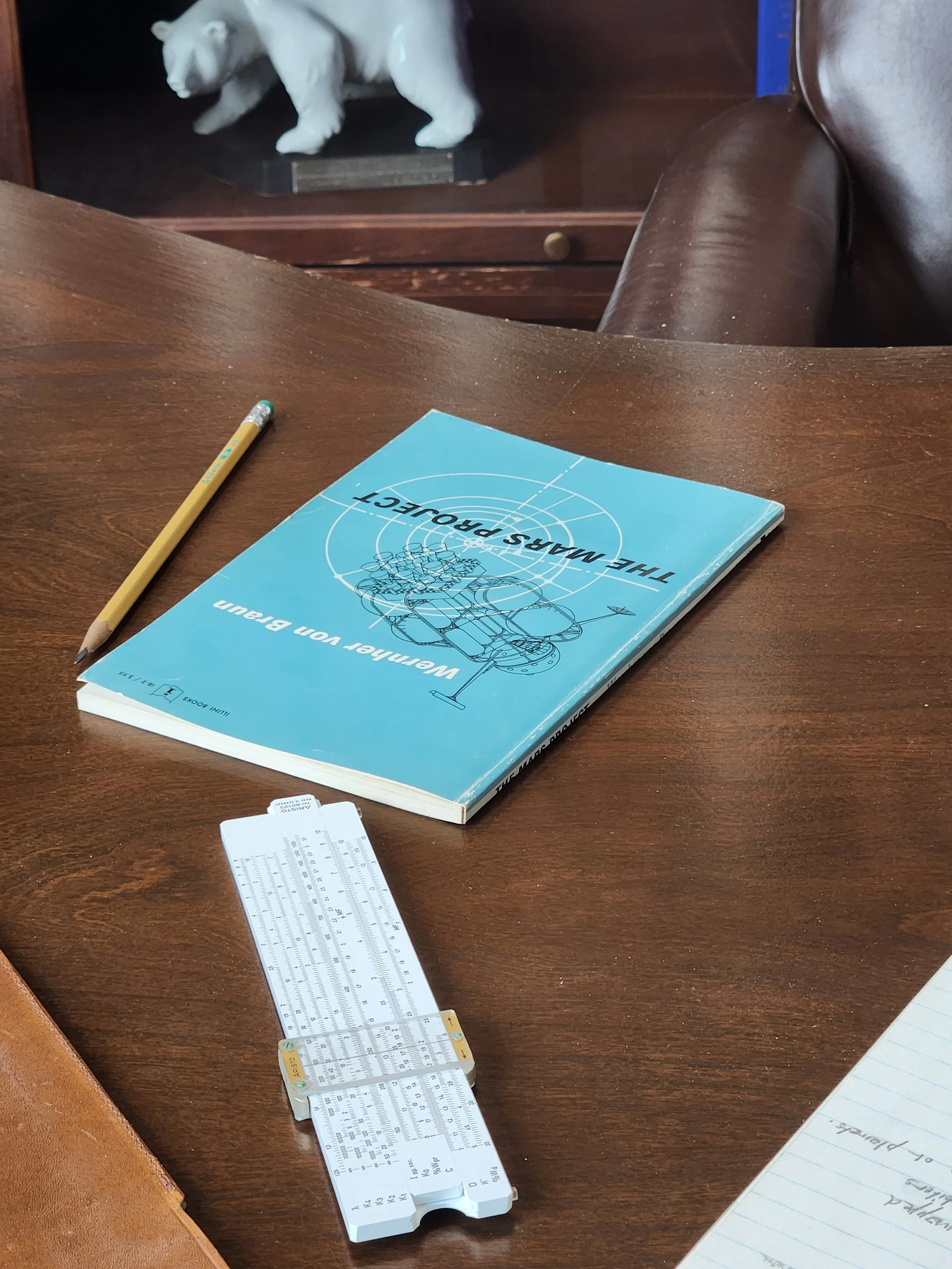
Werner von Braun's office recreation at U.S. Space & Rocket Center